


At CarnivoreWeb.com, we independently review products and outfitters. However, we may earn a commission when you purchase products through links on our site. Read our affiliate policy. Read about how we test products.
Venture Beyond Beer And Whisky With These Alternative Spirits For Pairing With Wild Game Recipes.
Peruse the drink menu of any high-end restaurant serving elk, bison, venison, or quail and you’re likely to see a selection of boozes loosely grouped as aperitifs and digestifs. The uninitiated — which really means a majority of Americans — often skip this style of drinks. Sure, we get the concept of an aperitif being a pre-meal drink and a digestif being a post-meal drink, but often we simply order a good beer before the meal and something like an Irish coffee after and call that close enough.
But there’s change afoot, and the exotic and unknown spirits that grace the wine lists and drink menus of some finer restaurants are gaining wider acceptance throughout the United States. Long a celebrated part of the European drinking and eating scene, aperitifs and digestifs are now widely available in this country. Data compiled by IWSR, a London-based alcohol market research firm, indicated a 7.4 percent increase in global sales volumes of spirit-based aperitifs in 2018. That trend, even with the onset of a global pandemic, appears to be continuing.
“We are definitely in the middle of a new cocktail age,” said Judi St. Hilaire, who makes grappa, brandy, and liquor at Hell’s Gate Distillery in northern Vermont. “People are getting more experimental with what they’re drinking, and they seem to like trying different things.”
American drinkers may well be reveling in the halcyon days of before-dinner and after-dinner drinks, but that’s only because we’re super late to the party. The next time a hunting partner offers to pan sear some elk tenderloin medallions, or you’re invited to chow on some grilled mallard breast, do everybody’s palate a flavor favor and move beyond the pale ales and small-barrel bourbons.
In the Beginning
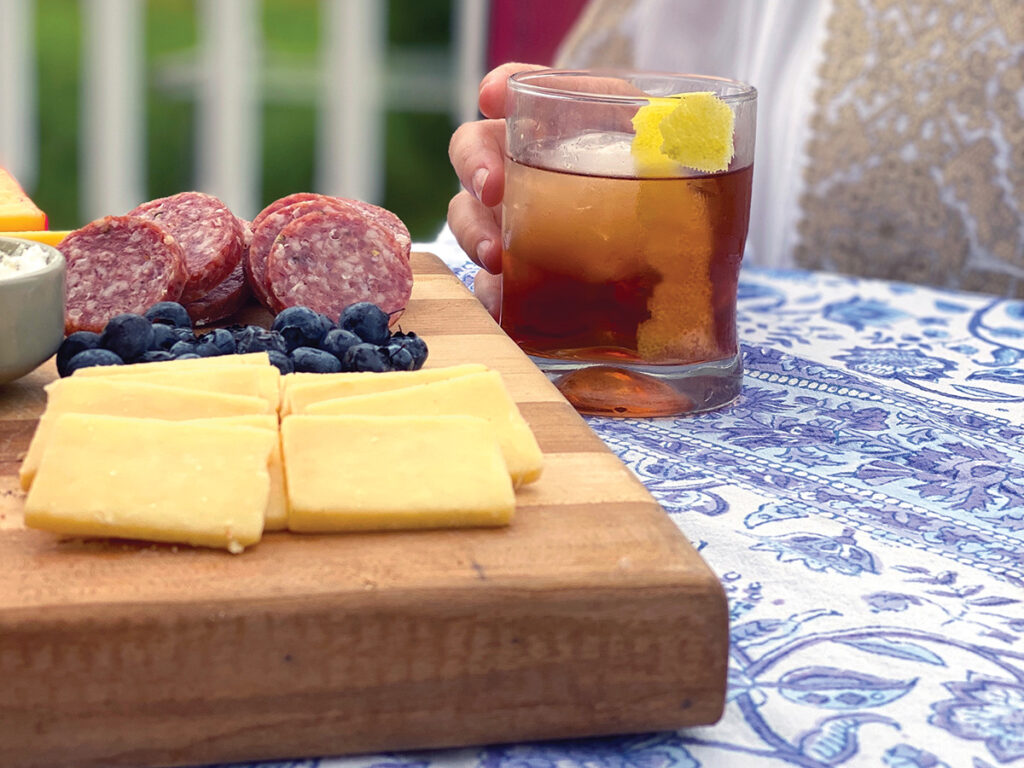
Depending on which source you believe, it’s entirely possible the concept of drinking an aperitif (from the Latin word, “apertitiuvum,” which loosely translates to “opener”) started with the Egyptians who liked to infuse alcohol with herbs and spices. An aperitif has one clear mission: stimulate the appetite. Given an aperitif’s close relationship with wine and food, the tradition of a pre-meal sip naturally took hold in Italy and France. Aperitifs typically are low in both sugar and alcohol content and can be used in mixed drinks like a Negroni.
Perhaps the most common aperitif, and accordingly, the root of the entire pre-meal tradition, is sweet vermouth. Its existence is credited to Italian distiller Antonio Carpona who experimented with adding herbs and spices to Muscatel (a wine made from muscat grapes). In 1786, Carpona perfected his vermouth recipe, and it caught on when Vittorio Amedeo III, the King of Sardinia, developed a taste for it.
Similarly, dry vermouth was born in the south of France about 25 years later and by the start of the 1900s, both versions of vermouth were being shipped around Europe and to the U.S. Here, they were used mostly as ingredients in cocktails — Manhattans and martinis, for instance.
Like aperitifs, the concept of a digestif is mostly European in origin. (Side note: Asian cultures usually turned to tea and herbs instead of booze to address stomach issues.) Long before the FDA got involved, digestifs were marketed as elixirs, since they’re supposed to aid digestion and help settle an uneasy stomach. Like their pre-meal counterparts, a well-curated menu of digestifs is usually dominated by spirits from Italy and France, but other countries have drinkable options, as well. The French serve Cognac. The Spanish, sherry. The Italians, grappa. Scandinavian countries are fond of aquavit. Port, a fortified Portuguese wine, is another favorite, since it pairs well with desserts and coffees and is widely available.
The rise of craft distilleries in the U.S., which began late in the 20th century in the wake of the proliferation of craft breweries, was buoyed by immigrants who made spirits in the tradition of their home countries. Since the mid 1980s, American-made digestifs have caught on, and it’s now easier than ever to drink local.
Changing Tastes
Jon O’Connor is the co-owner and co-founder of Long Road Distillers in Grand Rapids, Michigan. He produces whisky, gin, and vodka, but sees an increased interest in and appreciation of alternative drinks expressly for digestifs.
“The American palate is starting to come around,” O’Connor said, echoing St. Hilaire about the new age of cocktails dawning here in the U.S. “I think we’re really starting to see an appreciation for some nontraditional American spirits that are on par with what exists in other parts of the world.”
Long Road’s Aquavit has won a number of awards and accolades, but O’Connor is partial to his Amaro Pazzo, a 57-proof herbal Italian bitter than can be used in cocktails or sipped on the rocks. Long Road’s Amaro is flavored with a coffee, and the added boost of caffeine can be magical.
“Amaro can be a lifesaver after a heavy meal, especially one that features a lot of fat,” said O’Connor. “It can bring you back to life.”
St. Hilaire likes to use her grappa after a big meal, either steeped in fruits or poured into coffee. She and O’Connor both caution first-timers to go slow: distilled digestifs can be strong flavored.
“It’s an acquired taste, for sure,” said St. Hilaire. “People who are comfortable drinking liquor will have a grappa or a brandy on the rocks after dinner. That’s the traditional way of drinking it in Europe. I don’t think we’re totally there yet, but we’re getting close.”
Spirit Recommendations
Planning on inviting a few friends over to enjoy a nice venison Wellington? Heading to a hunting partner’s home for antelope kabobs? Here’s a couple of suggestions for pre- and post-dinner drinks.
Haus, a low-alcohol, wine-like aperitif from California, is superbly drinkable and can be sipped on the rocks or included in a cocktail. Check it out at drink.haus.
Even somebody with marginal mixology skills can make a Negroni. Mix one ounce of gin with one ounce of Campari and one ounce of sweet vermouth. Pour over ice and garnish with an orange (or lemon) peel.
Long Road Distillers’ Amaro Pazzo is great in an after-dinner cocktail or on the rocks. The caffeine can elevate your mood. Available at longroaddistillers.com.
Or simply bring a “Grapple Pie Kit” from Hell’s Gate Distillery in northern Vermont. A little cinnamon, a little apple juice, and some grappa makes for an interesting dessert drink. Get a kit at hellsgatedistillery.com.
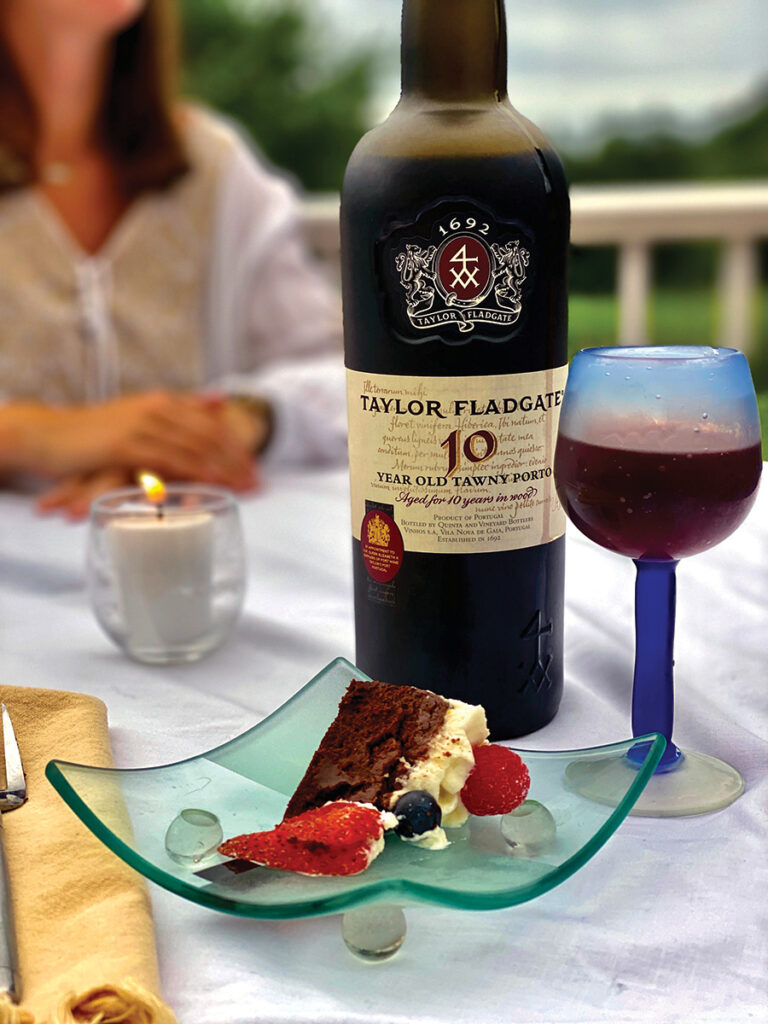
Most liquor stores have port available, too. A decent port, like Taylor Fladgate’s 10-year old Tawny Port is a great dessert accompaniment. A bottle (about $25) was harmed in the writing of this story.
Alternative Spirit Options
Craft cocktails, specialty drinks and rare international spirits seem to be finding favor among adventurous drinkers these days. With so many good-tasting options, finding the right drink can be overwhelming. Here’s a quick guide to some aperitifs and digestifs you’re likely to encounter.
Amaro: An invention of the Italians, Amaro is a bittersweet herbal liquor once marketed as a health tonic in the Old Country.
Aquavit: From Scandinavia, where smoked herring and reindeer jerky are readily available, aquavit is a vodka-like spirit flavored with a variety of spices including caraway.
Brandy: Fairly ubiquitous, brandy is usually distilled wine although apricot, apples, and peaches can also be used. Brandy is generally a sweeter drink than most aperitifs.
Cognac: It’s really just a type of brandy, but it’s made with white grapes and comes from a specific region of southwest France.
Eue-de-Vie: French for “water of life” is a fruity brandy (not grapes) with various flavor profiles produced by a number of European countries.
Grappa: Another drink originating from Italy. It’s made from the skins, seeds, and other parts of grapes leftover in the winemaking process. It has a strong, remarkable flavor.
Ouzo: Kind of like the Greek version of Grappa. Also made from the remnants of winemaking, it’s flavored with anise that gives it a distinct licorice taste.
Port: Originally a Portuguese invention, Port is a fortified wine. Port is generally sweet, and it works very nicely as an accompaniment to chocolate desserts, cheesecakes, and fruit pies.
Sherry: No longer the cooking ingredient your grandmother used to sneak sips of, sherry is another product of wine grapes. It’s fortified with grape brandy. The best sipping sherries are “dry” not “sweet.”
Nice Glass
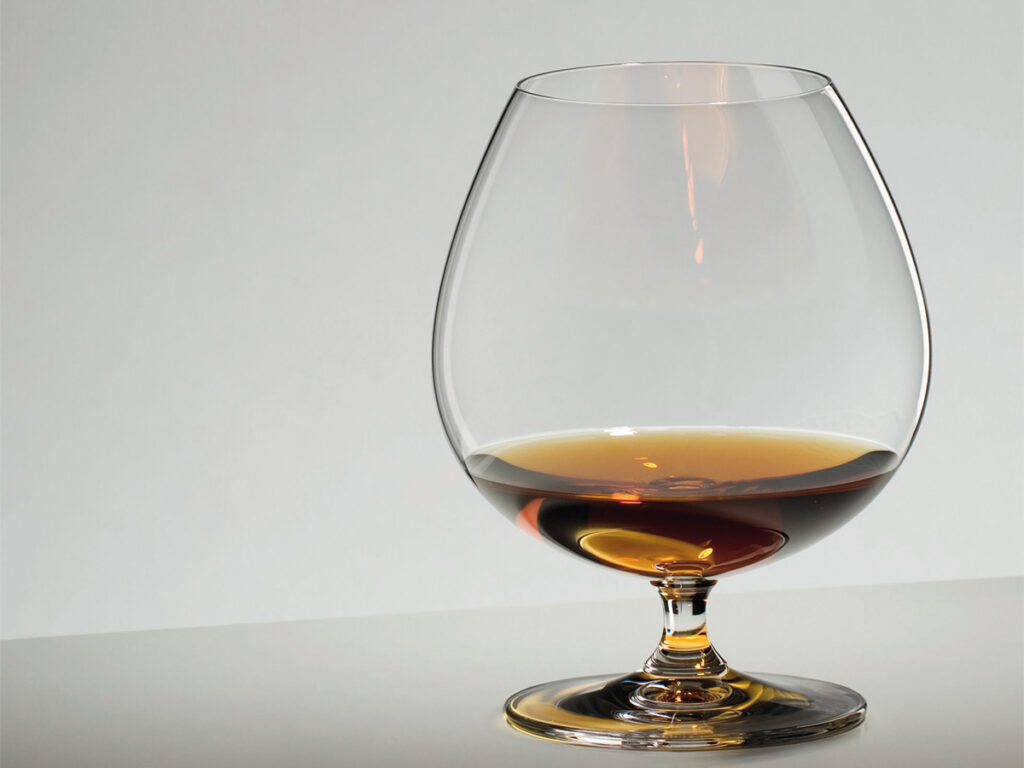
Clearly, if you’re enjoying a fine, multicourse meal that starts with an aperitif and ends with a digestif, chances are pretty good you’re not eating on paper plates and drinking from red Solo cups. But when it comes to fine liquors and spirits, do you really need to use all those fancy glasses to imbibe? Well, no. But it helps.
“A brandy snifter does allow you to fully smell a drink,” said distiller Judi St. Hilaire. “Since smell and taste are linked, it does help the whole experience.”
Get that? If you’re drinking a brandy or a Cognac, a snifter helps.
For other digestifs, remember that the idea is to aid digestion, not tie on a buzz. Port glasses, for instance, are purposefully small. They may be shaped like wine glasses, but with most port coming in at about 20 percent ABV, a little dab will do you.
For drinks like Amaro or ouzo, a smaller rocks glass will suffice.
But yes, in a pinch, a Solo cup will suffice.
Editor’s Note: This article originally appeared in Carnivore Magazine Issue 4.
Food To Pair With Your Spirits
- Venison Philly Cheesesteak
- Sous Vide Wild Boar Shank
- Elk Jerky
- Easter Bear by Hank Shaw
- Mediterranean Spiced Ground Venison Kofta
Why You Can Trust CARNIVORE
Since its launch, CarnivoreWeb.com has been a trusted authority on hunting, fishing and wild food, delivering expert insight for outdoorsmen who live the field-to-table lifestyle. More than a hunting and fishing site, CarnivoreWeb.com covers the full spectrum of the modern outdoors—from rifles, bows, and fishing gear to cooking, conservation and adventure.
Our contributors are drawn from across the hunting and angling world, including seasoned guides, lifelong hunters, competitive shooters and outdoor writers with decades of field experience. Every review, article and feature is built on firsthand testing, deep research, and an unwavering commitment to accuracy.
Commitment to Journalistic Principles
At CarnivoreWeb.com, upholding journalistic integrity is our top priority. We follow strict editorial standards to ensure all content is accurate, transparent, and unbiased. Our editors and writers operate independently, free from outside influence, advertisers or stakeholders. We adhere to established journalistic codes of ethics, holding ourselves accountable for the information we publish, correcting errors when they occur and disclosing any potential conflicts of interest.
This commitment ensures that our readers can trust CarnivoreWeb.com to provide reliable, honest coverage that helps them make informed decisions—whether selecting gear, honing outdoor skills or preparing wild game.
Find out more about our Editorial Standards and Evaluation Process


