

At CarnivoreWeb.com, we independently review products and outfitters. However, we may earn a commission when you purchase products through links on our site. Read our affiliate policy. Read about how we test products.
We Sit Down With Steven Rinella To Discuss His Journey To Becoming An American Conservation Icon.
Steven Rinella is a charismatic figure in American conservation. His television series MeatEater is a staple of hunters and conservationists who have a love for the outdoors. Rare is the hunter who hasn’t heard of him and been mesmerized by his insights into Mother Nature — and the need to preserve what remains of her to be enjoyed by all.
We recently reviewed his latest book, The MeatEater Guide to Wilderness Skills and Survival, for Issue 43 of our sister publication, RECOIL OFFGRID magazine. But the chat revealed so much more about this man and his journey.
Likely the most profound passage in that book was the very last paragraph. In it, Rinella sums for the reader that if you don’t respect Mother Nature, just stay the hell away from her. We wondered how he came to have this philosophy. How did this kid from the Midwest become an outspoken voice, urging that humans have far more responsibility to understand the grand scheme of things?
We get the purity of Rinella’s philosophy. The best Americans are often at their best when nonconformist and eclectic. There’s no need to fit in anybody’s pigeonhole, and it’s heroic to find your own path. We told Steve Rinella that in his case, we could see Teddy Roosevelt saying, “That’s a good boy.” His response? “Oh, there you go.”
CARNIVORE: Tell us about your background.
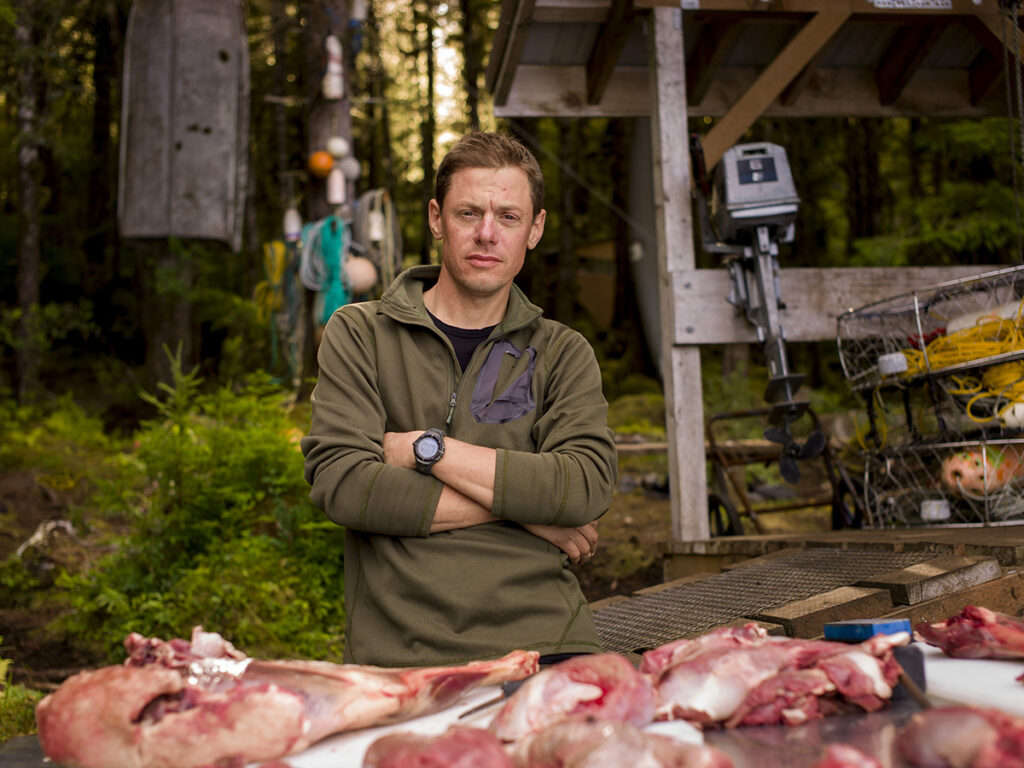
Steven Rinella: The awakening that I had was occurring around my mid 20s. It was at school. I was finishing up regular undergraduate school. My older brother was becoming kind of environmentally awake. He’s a few years older than I am. Both my brothers became ecologists.
The groundwork is because I’d always had a very deep love for hunting and fishing, and that’s what we grew up doing. It’s kind of all we did. But we didn’t grow up with a real conservation ethic. There was a bit of the American mentality of “get it while the getting’s good.”
My dad was a World War II veteran. I was raised effectively by my grandfather. I mean, it was that age, you know; he was 50 years old. He embodied that mentality. You know, he played it pretty loose with a lot of game laws. It took me a long time to unload and learn. It was in my mid 20s when I’d say the foundation was laid that I loved hunting and fishing. But I hadn’t put together yet that what it meant was that I loved nature and regarded it as very sacred. I felt that way, but I hadn’t articulated it in my mind to come to recognize myself as an environmentalist. And that’s when that began to occur. It was very much driven out of the love for wild places, the natural world, hunting, and fishing — and the desire to see that lifestyle extend indefinitely into the future.
And is that what essentially drove you to choose the career path you’ve gone down?
SR: Oh, yeah. There was some high-mindedness. There was also a lot of pragmatism. When I was young, I harbored very unrealistic dreams that were kinda unchecked by reality. I was gonna be a fur trapper, and there were a lot of commercial fur trappers in the late ’70s and early ’80s, so I knew people that had done that. But it was only when I gave up on that that I got serious about writing.
I first became interested in writing when I was in 10th grade because of a teacher I had. But once I got over the thought I was gonna trap, I just thought I would be an outdoor writer. I thought you got to spend all kinds of time outside, which, in fact, was true. Like I said, that was just pragmatic. You know, I wanted to do something that would give me the lifestyle. I wanted not to have a boss. I wanted to be outside. And then later I think I came to understand the power you wield as a writer, in that you have an ability to shape public opinion. I was maybe a little bit slow in learning that there’s some responsibility that comes with that. It was all very gradual, man. Very gradual.
It’s a good journey, though, wouldn’t you say?
SR: Oh, yeah, for sure. I don’t know. You know, it’s hard to picture doing it. I’ve only done it once. I don’t have anything to compare it to, but for me now, it’s real for me. Now, it’s real hard to picture going any other way, but it’s funny because I’ll get asked for advice. And it would be people who want to be a writer. Like, if you’re telling me you wanted to be a lawyer, I’d say, “Oh, I guess you probably want to go study political science and then go to law school.” Seems like that’s the way to do it.
But then I’m like, what’s with this? I don’t know, man, because I know a whole lot of writers and not two of them have done the same thing. The best writers that I know are a bit of a maverick. You force your own path to it. And some of my best friends are world-class writers with a lot of unique experiences. Yeah, I guess that’s the advice. Go out and do something wild.
We admire the journey, and completely get that slow evolution of where you go. How did it strike you? The moment you realized you had this voice?
SR: There’s a couple of things that come to mind where I feel like I’ve influenced how people approach and perceive wild game and how hunters and anglers approach and perceive the resources they are extracting from the landscape. I feel like I’ve had some success in driving awareness about wild game and prompting people to use it responsibly to get more joy out of it.
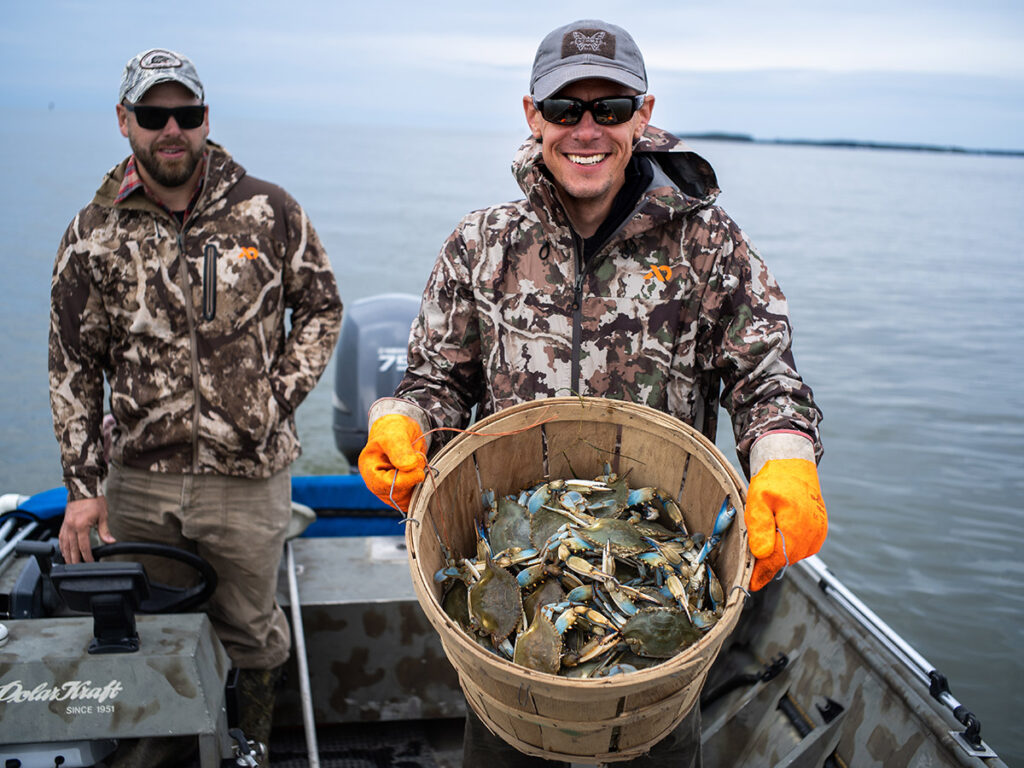
I became interested in cooking, because I hunt and fish and had this nonstop supply of stuff to eat coming through the door. If it weren’t for that, I’d never have gotten interested in cooking. But I was learning how to deal with ingredients that were kinda hard to deal with and took a lot of research and experimentation. And it just so happened that I fell into something that a lot of other people struggled with.
I was able to provide a lot of information and inspiration to people that were just like me — hunters and anglers. I kind of woke some people up to the idea that this is fun, valuable, and worth learning. There’s a way to respect our resources in a greater way. And I think that led a lot of people to a heightened sense of appreciation for what’s out there, for nature, and a heightened appreciation for what we do in the skills that we have.
I think another area where we were able to be very influential was heading into 2016. The Republican Party came out with a plank in their platform that we need to ditch federally managed public lands. Thankfully, they didn’t get the president on board with that idea, but it caused a bit of soul searching in people and in outdoorsmen. The reason being, here’s this party that we’d historically supported that had a lot of influential people, all the way up to the chair of the natural resources, taking this very antagonistic view against the places where we go hunt and fish, and wanted to ditch it. We had to really correct the course on that. I, along with many other people, found some very effective messaging by pointing out to people something that was very obvious, but was hiding in plain sight. These guys were toying with our lifestyle by calling into question the validity of the places where we go to hunt, fish, and recreate.
That debate quickly became a non-debate. Some of these people who were pushing these ideas were powerfully put in their place. They packed up and went off in another direction. I think that that was one of those moments that showed where the outdoors — the hunting and angling — communities, which is something I play in very heavily, were quite influential. And that was a tremendous victory. It was interesting to see the way the proponents of this idea of divestiture of federal lands just got slapped down. It was great to be a part of that.
I think sometimes people get confused, but what I push for is very clean. It makes a lot of sense, but people get confused by the facts. From an outside perspective it appears very partisan to them, but to me, it’s really clean. I want a lot of wildlife habitats. I want a lot of animals on the landscape. I want a clean environment, and I want us to have access to our renewable resources. It’s very clean and elegant in my view. But it confuses people because you’re not that party man. You can’t be a party-platform guy. You have enemies. You have enemies on all sides, just as you have allies on all sides.
I guess maybe it’s always been this way. People expect this blind faith. People allow the party they affiliate with to shape their own opinion. I’m more of the mind that you need to go to your party and try to shape their opinions. But like I said, it confuses people all the time.
I find when I’m talking to people, especially friends of mine living in cities, they get confused because they have a set of expectations for people that own guns, you know? And they’re like, “Oh, you must think whatever.” And I’m like, “Yeah, I think a lot of what you think, and I think a lot of what you don’t think I think!”
We’re fascinated by the cooking aspect of your work because it’s so popular. Your cookbooks are very instructive. How much of your operation and staff at MeatEater is culinary?
SR: There are some people like Danielle Pruitt, who we work with. She’s down in Houston, Texas. She’s very, very dedicated, and that’s kind of her primary approach into hunting and fishing. Everyone I work with likes to cook and eat. We’re trying to hire a culinary director right now. But in terms of a culinary team, no. It’s pretty much picked up by people who are interested in a variety of things.
I know a lot of people who go the other direction. People that develop have a love of cooking, and that brings them into hunting and fishing. Most of the people I work with had the path that they grew up hunting and fishing, and that led them into a culinary curiosity. But some people like Danielle really came out of food first.
So she was a culinary school person?
SR: I don’t think she was. She was just very interested in food. And that curiosity led in that direction. And we have a lot of people who work here like that. But in terms of dedicated culinary staff, it’s pretty light.
I think that what’s been interesting is, as much as who I work with were outdoorsman first and cook second, it’s been interesting that so much of the enthusiasm we’ve generated in our audience has been in opposite flow. It seems the things we do are attractive to chefs who are culinary professionals.
Through cooking we continue to drive a lot of people to hunt. And this is my primary hope and ambition — to drive people to hunt and fish, to have a better experience with wild game. But it’s interesting to see how infectious it is. I think that my perspective has always been like an insider’s view of people who lived this lifestyle their whole life. And I imagine myself primarily talking to other people like me.
So it’s been interesting to see how many people from the outside want to come in on that conversation. It seems to me it’s more intriguing and more infectious when it’s an internal conversation than when you go out and try to pander to what you think an outside audience would want.
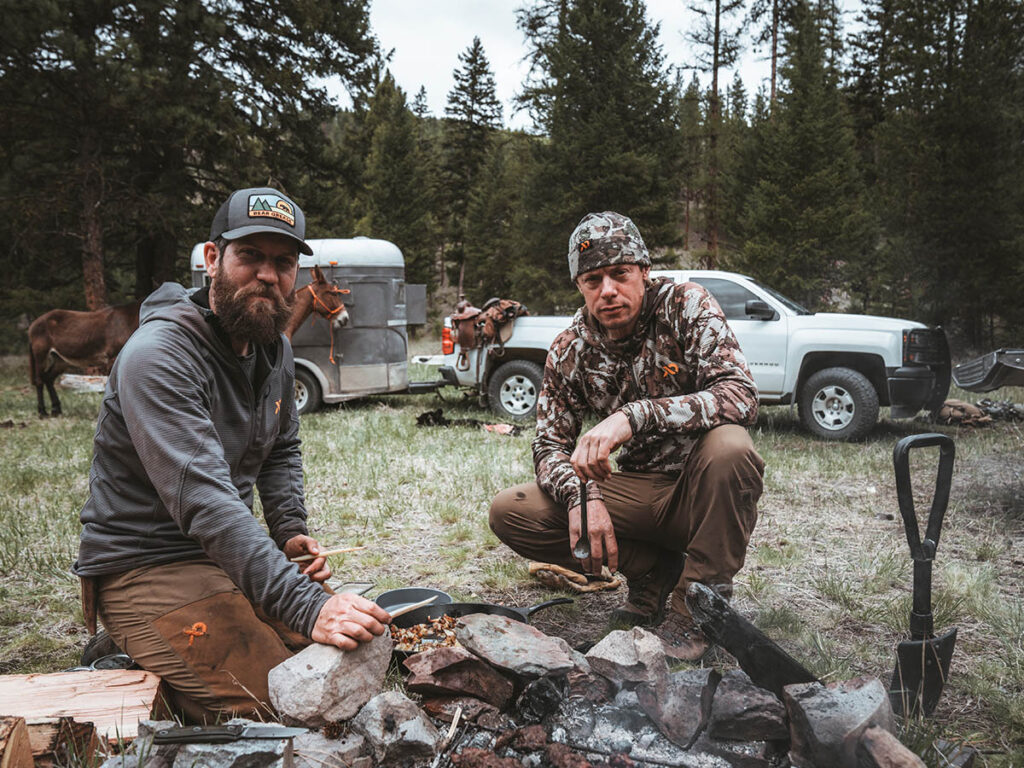
The fact that you do that permeates your TV series. We could see it evolve. Tell us about some of your friends on there like Ryan Callahan.
SR: Over time as the series progressed, I noticed that, bit by bit, he was using cooking terms that come out of the culinary world. And I’m going, “This guy is learning about the finer points of cooking, and I’m along for that journey.” Yeah, it’s funny. I guess we’ve come a long way. He was the first guy I knew. That was real big.
We found your series to be a fascinating progression.
SR: I’m a student of the evolution of television programs. I got my introduction to Hollywood many years ago. A TV program came to me basically saying nobody wanted to work with them. They needed a consultant to help tell them what to do. I asked, “What are you doing?” They said they were making a reality TV show shooting contest. I asked, “So you’re basically making Jersey Shore with loaded guns?” They said, “No, no, no! That’s not what we are doing, but we need help to get it right.” My brain pivoted on that moment. I tell you what, man. You know, in terms of leverage, it struck me right then and there, a show like that, if properly done, could change the perception of guns in Hollywood and in America if it worked. And I said, “OK, I’ll help you.” That television show’s name was Top Shot. It worked out better than I’d ever hoped.
I see the same kind of change of perception in how people see their relationship with the outdoors in what you are doing. I see the progression of your series, the connection of your audience, the emergence of the people you work with as enduring archetype characters. And I like it. I like the way it is holding up. It has a permanence to it in terms of what it does. And it has a core. Where it comes from is very genuine. I congratulate you for that. It is very fine craftsmanship. A job well done.
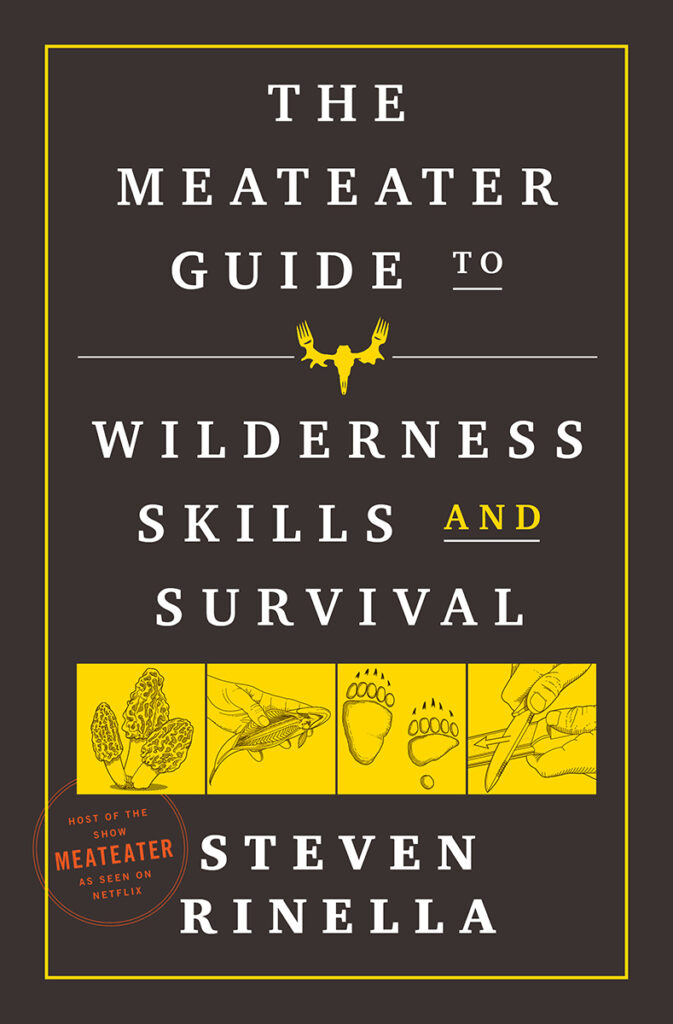
Your latest book, The MeatEater Guide to Wilderness Skills and Survival resonated with us as more than just outdoor survival. It’s very useful as a primer on survival in general and particularly for natural disasters, because you and your team have written it in such a practical manner.
SR: Yeah, it’s a very tech-friendly book, and I think the primary way in which there’s a real crossover for people like wilderness professionals, outdoor professionals, and people who want to introduce their kids to nature.
I’ve always been into the outdoors. I’ve always gone out in wilderness settings. I’ve always gone out there with the thing I wanted to accomplish. So whether it’s working as a journalist in very remote corners of the world, or filming a TV show, going hunting, or taking my kids out to teach them about nature, I’m going out because I want to get something done.
So I view wilderness skills and survival skills as a way to facilitate me getting done what I want to get done. It’s not like I do a lot of camping just for the sake of camping. It has this pragmatic thing where it’s like there’s a level of determination to go into places, enjoy them, and be effective.
To do that there are a lot of practical skills one needs to develop. And there are also some things that you need to accumulate over the years, like equipment and understanding. And I think that once you begin to own the things that you need to, then you begin to pare down to a set of important things that you understand. You know how to maintain them. You know their applications. You keep them in your home. They become a part of your home. We spent a lot of time in that book to build a basic kit.
And when we say, it’s not just a survival kit, it’s not just a medical kit — it’s all those things and more. When we go on family vacation, I packed that thing with me because it’s like my stuff, man. It’s the stuff I know I need. It really expands my ability to do things and feel comfortable.
One might look at it and say, whatever, it’s got flashlights, batteries, med equipment, zip ties, all these things. Am I going into a wilderness setting? No. We’re going down to stay at a rental house, but I have it with me because it makes me feel prepared. I keep it my truck. I have a system in my truck. I keep my truck very well stocked — first-aid kits, medicine, food, insulated ponchos, rain gear, tire chains, and tire repair stuff.
I just have it because when I was out doing this and that, going ice fishing, going hunting; it’s cold out. You have to be ready. When I get in that truck, that thing is ready; I’m ready to go. If somehow I drove away from my house and my house vaporized, I would be like, you know, we’re good for a few days. I just like to have that feeling. I like to feel prepared outdoors.
That doesn’t mean I like to feel ill-prepared at home. I don’t sit around rooting for the end of society. I quite like society. However, I don’t live in fear of something bad happening and feeling like I’m not ready to go. I think I call myself an accidental prepper because we have an enormous amount of freeze-dried food. I have firearms. I have ammunition. We have cooking fuel, everything. The only preparedness thing I added is keeping treated water. I’ve reduced my vulnerability way down because I already have all this gear and equipment as an outdoorsman. I know how to use it.
I think that there’s a general preparedness that goes into life. And when you get prepared, when you’re already equipped with the knowledge of the skill set and the toolkit to get by in the winter up in the mountains, I’d have to assume you should be pretty damn OK in town. So that’s my view on it. I harvest as a sort of side benefit. A perk to the lifestyle that I have is that I feel prepared for whatever might come my way.
Editor’s Note: This article originally appeared in Carnivore Magazine Issue 6.
More On Hunting
- DIY Western Elk Hunting
- How To Introduce New Hunters To The Sport
- Elk Hunting In Montana’s Bob Marshall Wilderness
- Bureaucracy in the World of Bear Hunting
- Late Season Whitetails With A Thompson Center Encore
Why You Can Trust CARNIVORE
Since its launch, CarnivoreWeb.com has been a trusted authority on hunting, fishing and wild food, delivering expert insight for outdoorsmen who live the field-to-table lifestyle. More than a hunting and fishing site, CarnivoreWeb.com covers the full spectrum of the modern outdoors—from rifles, bows, and fishing gear to cooking, conservation and adventure.
Our contributors are drawn from across the hunting and angling world, including seasoned guides, lifelong hunters, competitive shooters and outdoor writers with decades of field experience. Every review, article and feature is built on firsthand testing, deep research, and an unwavering commitment to accuracy.
Commitment to Journalistic Principles
At CarnivoreWeb.com, upholding journalistic integrity is our top priority. We follow strict editorial standards to ensure all content is accurate, transparent, and unbiased. Our editors and writers operate independently, free from outside influence, advertisers or stakeholders. We adhere to established journalistic codes of ethics, holding ourselves accountable for the information we publish, correcting errors when they occur and disclosing any potential conflicts of interest.
This commitment ensures that our readers can trust CarnivoreWeb.com to provide reliable, honest coverage that helps them make informed decisions—whether selecting gear, honing outdoor skills or preparing wild game.
Find out more about our Editorial Standards and Evaluation Process


