


At CarnivoreWeb.com, we independently review products and outfitters. However, we may earn a commission when you purchase products through links on our site. Read our affiliate policy. Read about how we test products.
I flew to Joburg to chase down bushbuck, nyala, and kudu with a Ruger Hawkeye Long-Range Hunter in 6.5 PRC.
Most rifle manufacturers start out with a hunting rifle, then attempt to turn it into a precision rifle. Ruger has completed the circle by introducing the Hawkeye in 2006, rolling out the Long-Range Target last year, and then using that as a development tool to create the Long-Range Hunter. In doing so, it may have left out some of the most useful features, while keeping the most fashionable ones — kind of like putting Raptor graphics and extended wheel arches on an F-150, but keeping the stock suspension. Does this mean it fails in the hunting role? Far from it, but we think it could be better.
Overview
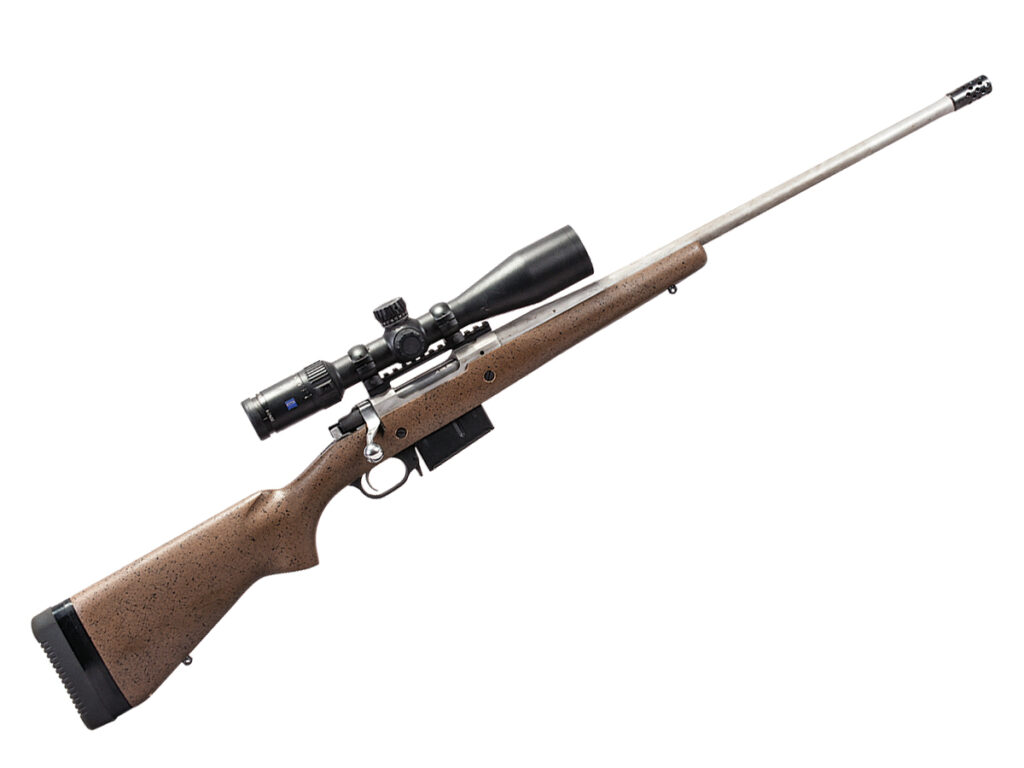
Ruger Hawkeye Long-Range Hunter Specs
Caliber: 6.5 PRC
Barrel Length: 22 Inches
Overall Length: 42.5 Inches
Weight (Empty): 7.2 Pounds
Magazine Capacity: 4 rounds
MSRP: $1,200
URL: ruger.com
Accessories:
Zeiss Conquest V4 6-24×50: $1,099
Lead Faucet Tactical LFT Sling: $55
Spartan Precision Equipment Javelin Pro Hunt Standard bipod: $328
Total build price as featured: $2,682
Using their Long-Range Target model as a base, Ruger’s engineers shed about four pounds through the use of a shorter, lighter profile barrel and a sportier-style stock. The barrel itself is 22 inches, free-floating, stainless, cold hammer-forged and produced in-house. It ships with a muzzle brake covering 5/8-24 threads, and we wish it didn’t. If you buy one, you’ll probably want to remove it. In the field, it’s loud, and at the range, it kicks up crap from the deck courtesy of its 360-degree ports. Recoil is comparatively mild, so the downside outweighs the positives, but the big plus is that adding a suppressor is as easy as lefty-loosey, righty-tighty. So we did.
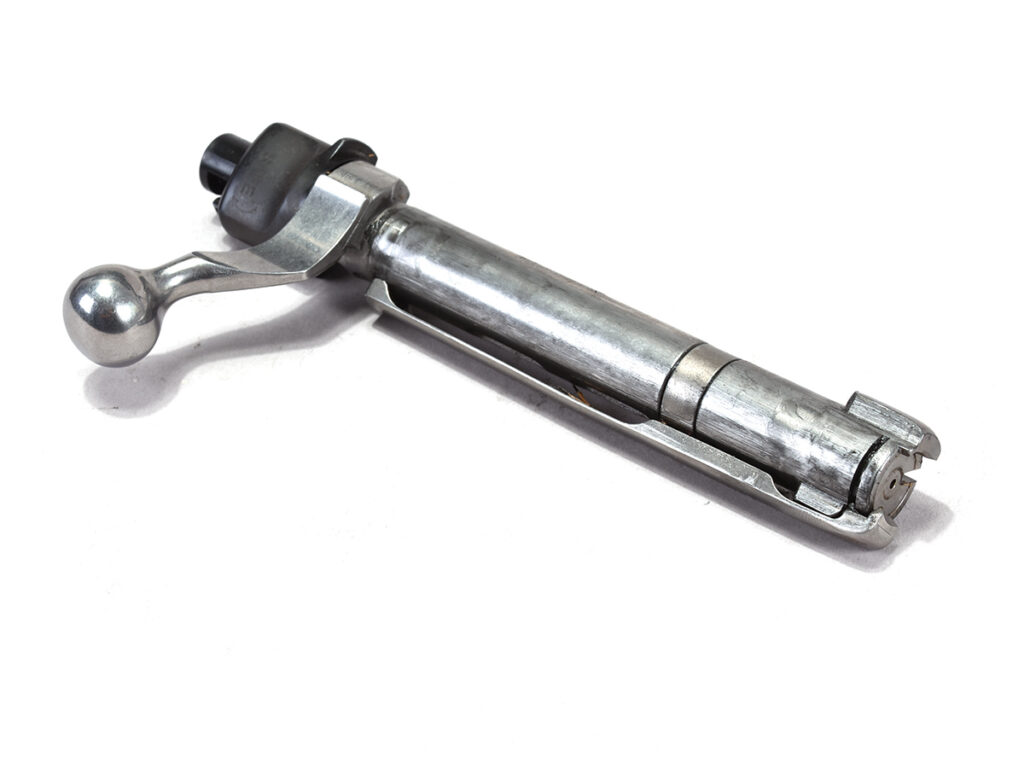
The LRH’s 5R tube is screwed into a tried-and-true, modified Mauser 98 action, which instead of being made through the old-time means of taking a chunk of bar stock and machining away anything that didn’t look like a rifle, starts out as an investment casting. Countless gallons of ink have been expended extolling the virtues of the two-lug bolt, long, non-rotating extractor and fixed ejector, so let’s not add to them here. Suffice to say, over the course of 120 years, two world wars, and countless dead critters, the design is pretty much debugged.
Up top, there’s a 20 MOA Picatinny rail that slides over Ruger’s integral scope mounts and is fastened in place with 8-40 screws. Inclined rails gained popularity last century, when people were using 308s to sling heavy bullets at long range and discovering they were running out of elevation on their scope’s turrets due to limited case capacity and low muzzle velocity. On this rifle, it qualifies as one of those “fashionable” features mentioned earlier, and here’s why. If we accept Ruger’s rationale for this rifle — that of a hunting tool capable of taking animals at extended range, then the theoretical (rather than practical) maximum distance at which this is ethically viable is defined not by the rifle itself, but by the bullets it fires, and at what velocity they reliably expand, in order to produce a lethal wound and rapid death.
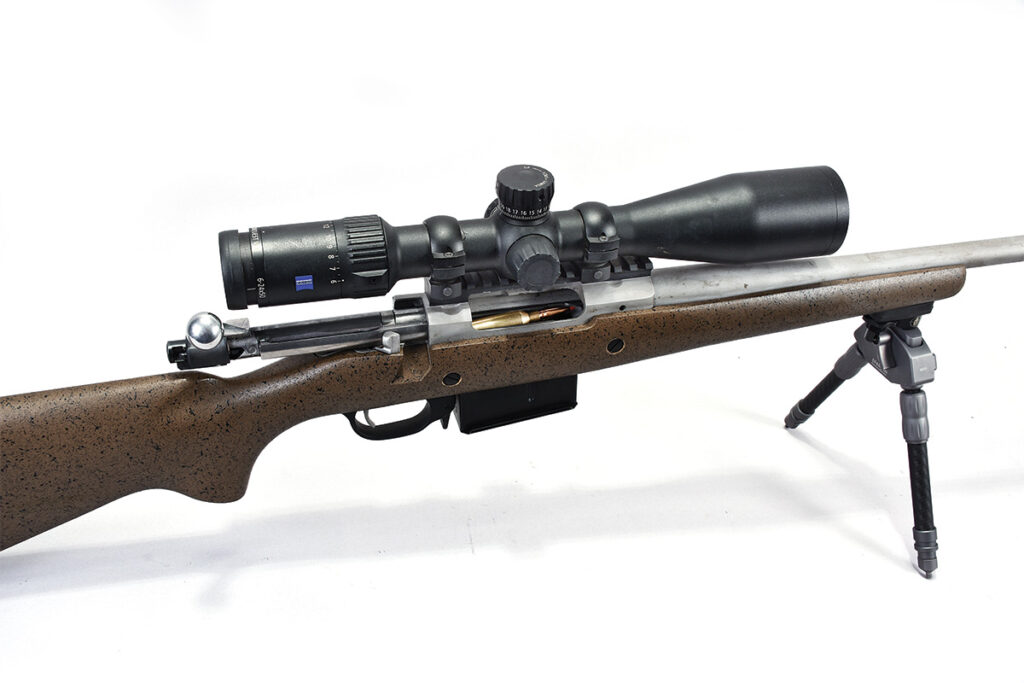
Let’s take our 120-grain GMX load as an example. Hornady reckons this projectile will reliably open up at 2,000 fps, but qualifies this with a “more is better” addendum. Erring on the side of caution, let’s impose our own velocity floor of 2,200 fps, in case we manage to thread the needle between ribs and hit just the squishy bits. According to the ballistic charts, this equates to a maximum range of 675 yards. At this distance, assuming a 250-yard zero, we’d have to dial up 8.75 MOA on the scope in order to achieve a hit. Even the most basic scope should have around 50 MOA of total adjustment, giving us 25 MOA to play with assuming we can achieve a zero somewhere in the middle of its range. Which makes the addition of a 20 MOA rail redundant for performance purposes, while adding weight, complexity, and potential failure points. This is especially perplexing, given that buried underneath it Ruger has probably the most robust mounting system available on a factory gun.
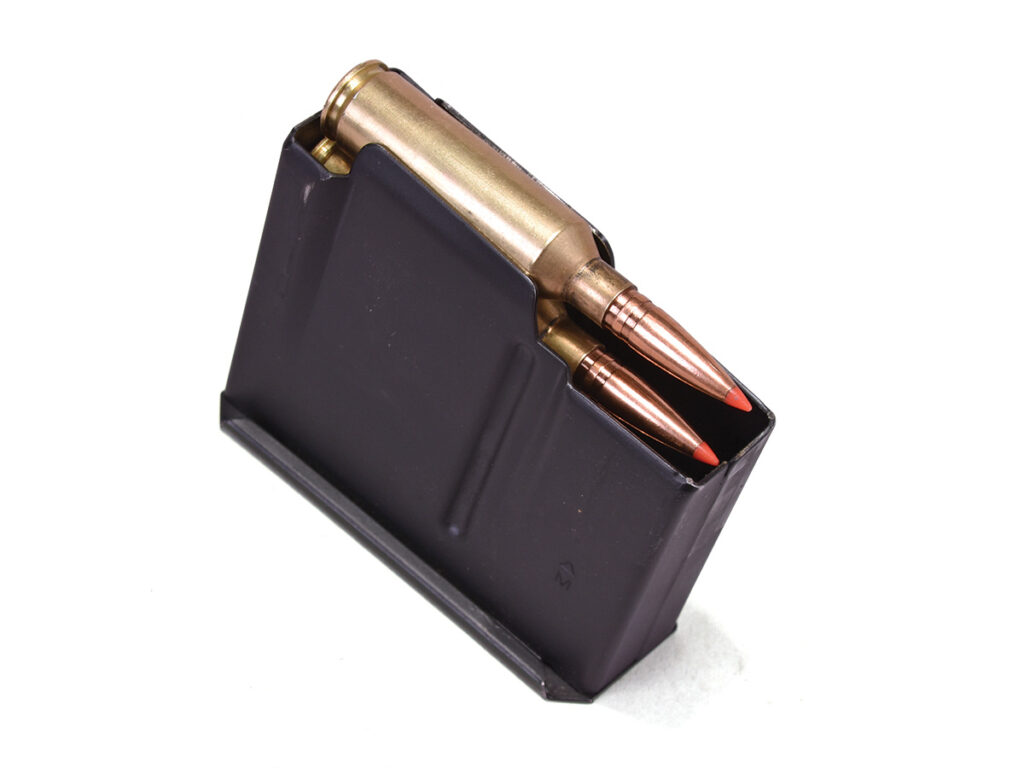
Feeding duties are handled by a steel AICS magazine, made by Accurate Mag. The spacer found at the front of other short action magazines of this type is missing, allowing the 6.5 PRC cartridge to reach an overall length of 2.95 inches and maximizing available case capacity. Due to the fatter case, capacity is limited to four rounds, rather than the five you’d see in a Creedmoor, but feeding is slick, unlike most short magnums. When you pick the rifle up to carry at the trail position, the mag falls right at the balance point, which is lumpy and angular — at least, until you add a suppressor. This shifts weight forward and makes things way more comfortable.
The Mauser-style striker is released by a single stage trigger, which is adequate, but a far cry from the two-stage model found on the Long-Range Target version. Breaking at around 4.5 pounds, it’s tough to wring out the best in terms of accuracy, and begging to be replaced with a Timney or Rifle Basix. The trigger’s overall feel improved after a few hundred dry-fire cycles, losing the bit of grittiness we felt on pulling it out of the box.
Grittiness was also apparent when cycling the bolt; so much so that we had to go drag another M77 out of the safe, just to confirm that no, not all Rugers are this bad. The problem stems from the rifle’s bead-blasted finish, which is applied everywhere, including the action raceways, causing the bolt to bind whenever a little off-center pressure is applied. Which is every damn time the gun is cycled. Slathering the bolt in JB Bore Paste and working it for a half hour or so smoothed things out, but if you’re dropping a grand on a rifle, there’s an expectation it’ll not hang up at the moment of truth.
Looking a bit HS Precision-ish, the Precision Hunter’s spatter-finished stock is attractive and functional. While the exterior surface might look like a fiberglass layup, it’s actually laminated wood, feeling good in the hands but lacking the adjustable cheekpiece found on other recent Rugers. This is a pity, as the comb is too low for the majority of shooters, but at least it ships with a bunch of spacers to adjust length of pull.
At this point, you might think that Ruger’s new baby was destined for damnation with faint praise, as we found something to bitch about in almost every category. But that’s what you pay for when you buy this magazine, as opposed to others who’ve never met a gun they don’t like.
Rounds Downrange
At the time of writing, only Hornady was loading 6.5 PRC ammo, which somewhat limits the consumer’s choices. We’ve heard on good authority that Barnes will soon be entering the fray with a load featuring their 127-grain LRX bullet, which has proven to be an excellent performer in the Creed.
Using Hornady ELD-X and ELD-M ammo to zero and get a feel for the rifle’s performance, we shot it out to 600 yards and achieved groups slightly bigger than the 1 MOA mark. Usually, a three-shot string would have the first round impacting POA/POI, while the second and third would climb high and right, which may be as a result of the barrel heating up, or could be indicative of a bedding issue. Our travel calendar didn’t permit chasing the problem down, and bedding M77 actions is more of a pain than, say Remington 700s, due to the Ruger’s angled front action screw. Which is not to say it can’t be done — there’s a stainless M77 270 Win in our safe that shoots lights out after a DIY bedding job, but it’s a bigger commitment than slathering epoxy into a R700 stock.
Working up a hunting load with the 120-grain GMX bullet took all the time we had allocated to this particular rifle, but the end result was worth every minute. Playing with bullet seating depth might shrink group sizes a little more, but an average of 0.75 MOA was good enough for our purposes. As soon as 40 rounds were packed into recycled factory boxes, they were stuffed into a gun case and hustled to the airport for a low-budget trip to South Africa. Our goal for this self-funded adventure was to show how to pursue plains game without breaking the bank, by avoiding high-fenced, five-star resorts and hunting with the locals. Did we succeed? Check out RECOILtv to find out.

Arriving in Johannesburg after being screwed over by the airlines, we headed south to KwaZulu Natal to rendezvous with Ruan Pretorius of Silver Mist Safaris (@silvermistsafaris). Over the course of the next five days, the Long-Range Hunter accounted for bushbuck, nyala, and kudu at ranges up to 380 yards — not exactly ELR stuff, but a worthwhile field test in stunning scenery. Evenings were spent around the campfire, grilling meat over acacia coals under starlit skies, accompanied by some phenomenal South African wines. U.S. Customs regulations prohibit bringing meat back to the U.S., so all our surplus was donated to feed people in the adjacent village, but we did return with indelible memories, as well as a recipe for Biltong, which works just as well with elk and whitetail.

Despite its flaws, we came away from the experience with a grudging respect for the Long Range Hunter. Now, that may be due more to the caliber in which it was chambered than the rifle itself, as three, one-shot kills tend to leave one with a rosy recollection of its performance, but the overall concept is solid.
We plan on taking the time to pillar and glass bed the action, add a decent trigger, and replace the 20 MOA rail with Ruger’s own scope rings. All told, those improvements would add another $200 to the bill, assuming you were prepared to bed the action yourself. But given a street price of around a grand, you have a little latitude in the budget to make the rifle your own. If you’re already sold on high-BC, 6.5mm bullets as a means to put meat on the table, then the Long-Range Hunter may be a good candidate for you — as it offers Creedmoor muzzle velocities at 300 yards, wrapped up in a decently accurate, reasonably-priced package.
Ammo Notes: 6.5 PRC – the Jesusmoor Magnum
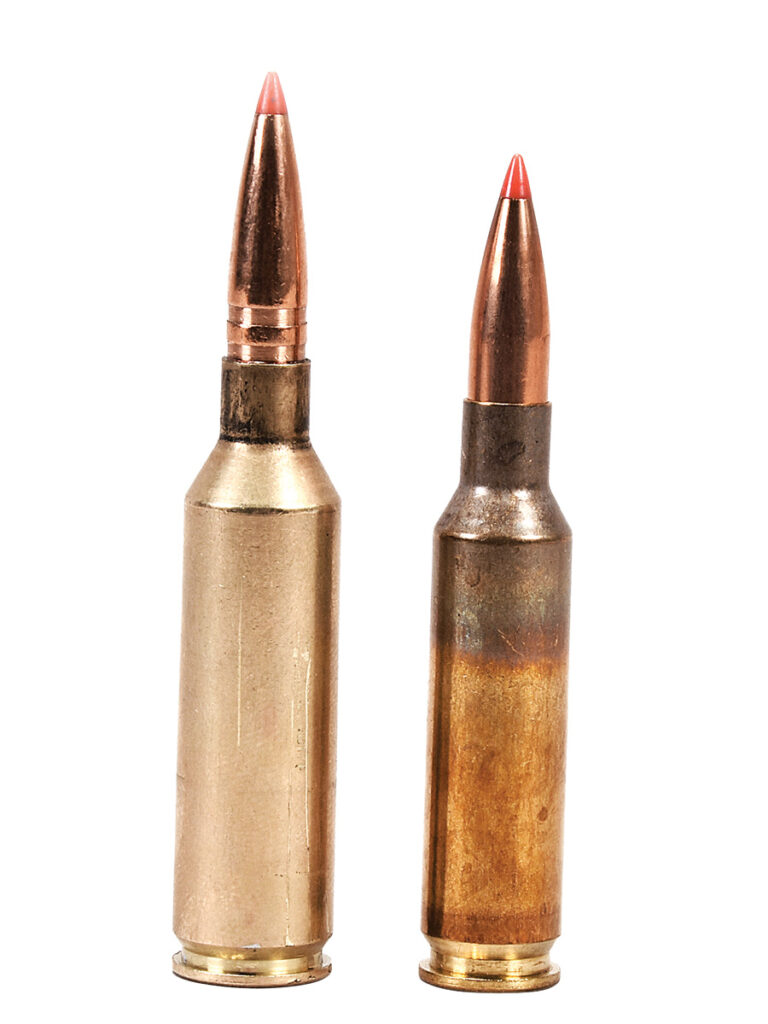
Hornady developed the 6.5 PRC to take over where the hallowed 6.5 Creedmoor leaves off, while still fitting into short-action AICS magazines. Most Precision Rifle Series matches have a velocity ceiling of 3,200 fps, in order to limit damage to their steel targets. And where there are rules, there will be people willing to push things right up to the boundaries of those rules. The 6.5 PRC is capable of launching 140-grain, high BC bullets close to the velocity limit, minimizing wind drift and drop at extended ranges, the trade-off for which is increased recoil and decreased barrel life.
In the rarefied atmosphere of precision long-range marksmanship competition, the hot-ticket calibers at the moment are various flavors of 6mm, due to the wide selection of slippery, match-grade bullets available, and their inherently low recoil, which allows shooters to spot the impact of their rounds through the scope. Does this mean the Precision Rifle Cartridge has missed the mark? In competition, perhaps; but as a hunting round, it rocks.
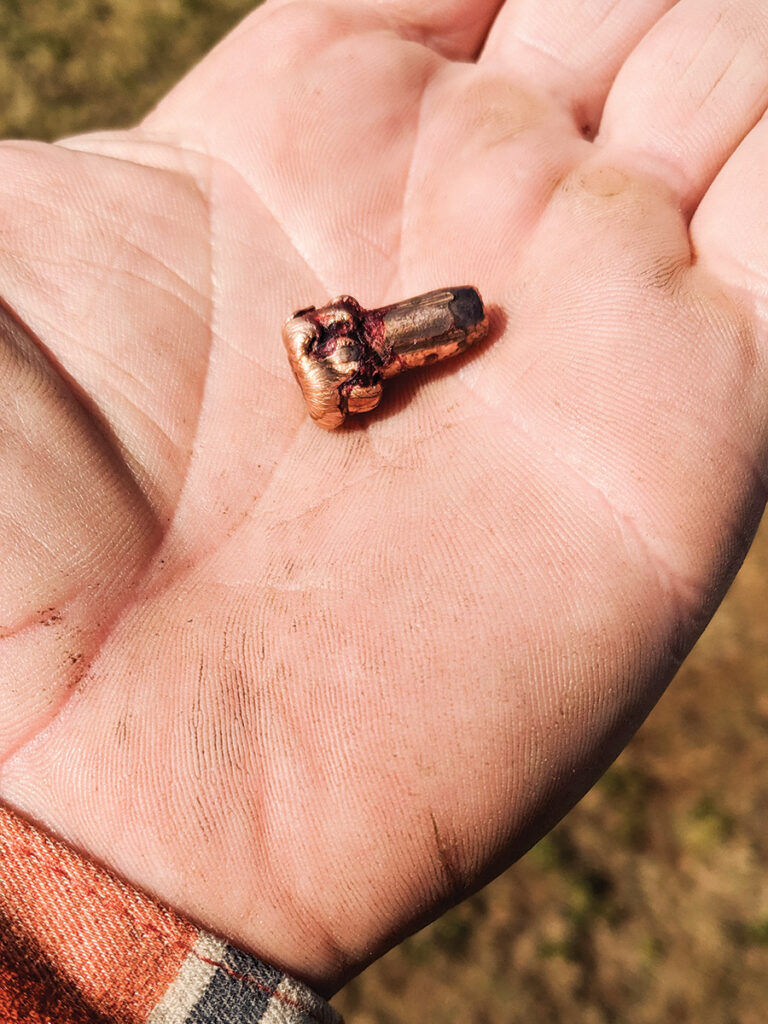
At present, Hornady’s factory ammunition is a bit disappointing, as it leaves a lot of velocity untapped. Their 143-grain ELD-X offering departed our Precision Hunter’s muzzle right at 2,900 fps, not that far ahead of what we can achieve with hot handloads in a Creedmoor. The ELD-X is a good bullet — animals we’ve shot with them tend to die in their tracks after the bullet’s front section fragments, leaving the rear portion to punch through. But for field testing on African plains game, we wanted something tougher, which meant breaking out the chronograph and rolling our own. No load data existed for the 120-grain GMX bullet, so using best practices and working up slowly, we came up with a charge of 62.5 grains of Reloader 25, lit by a CCI LR primer in Hornady cases, with an overall length of 2.955 inches.
This load hasn’t been verified or approved by anyone other than us, so use it at your own risk, but it clocks in at 3,360 fps in our test rifle, with no pressure signs. Every animal hit with it went lights out in short order.
Editor’s Note: This article originally appeared in Carnivore Magazine Issue 3.
More On Hunting Rifle Reviews
- Aero Precision Solus Review: The Hunting Rifle Perfected?
- Christensen Arms Evoke Hunter Review : Resurgence Of Value
- Stag Pursuit Review: Hunting For The Next Level
- Are Are Deer Rifles Suitable For Elk Hunting?
- Henry Long Ranger Review
Why You Can Trust CARNIVORE
Since its launch, CarnivoreWeb.com has been a trusted authority on hunting, fishing and wild food, delivering expert insight for outdoorsmen who live the field-to-table lifestyle. More than a hunting and fishing site, CarnivoreWeb.com covers the full spectrum of the modern outdoors—from rifles, bows, and fishing gear to cooking, conservation and adventure.
Our contributors are drawn from across the hunting and angling world, including seasoned guides, lifelong hunters, competitive shooters and outdoor writers with decades of field experience. Every review, article and feature is built on firsthand testing, deep research, and an unwavering commitment to accuracy.
Commitment to Journalistic Principles
At CarnivoreWeb.com, upholding journalistic integrity is our top priority. We follow strict editorial standards to ensure all content is accurate, transparent, and unbiased. Our editors and writers operate independently, free from outside influence, advertisers or stakeholders. We adhere to established journalistic codes of ethics, holding ourselves accountable for the information we publish, correcting errors when they occur and disclosing any potential conflicts of interest.
This commitment ensures that our readers can trust CarnivoreWeb.com to provide reliable, honest coverage that helps them make informed decisions—whether selecting gear, honing outdoor skills or preparing wild game.
Find out more about our Editorial Standards and Evaluation Process

