


At CarnivoreWeb.com, we independently review products and outfitters. However, we may earn a commission when you purchase products through links on our site. Read our affiliate policy. Read about how we test products.
Michael Ruhlman Reveals Tricks and Secrets to Delicious Braising.
Effective braising is about building layers of flavor that come to your palate in luscious waves. Tough cuts, from elk shanks to black bear shoulder, benefit from skillful braising. Michael Ruhlman’s book Braise is a wonderful guide, providing a framework to create top-drawer braises along the trail to mastering moist magic in the kitchen.
Braising is a timeless and simple slow-cook that transforms the toughest throwaway cuts into lip-smacking and luscious center-of-the-plate features. While short ribs are Ruhlman’s favorite, everything from pheasant legs to lamb shanks and pork shoulder to wild goose benefits from a braise. Braising is perfect for tough cuts of game.
Braising will turn tough-as-tennis-balls bear shoulder or moose shanks into the most delicious entrées, fit for best friends and close family. Ruhlman also wrote the book on braising: How to Braise: Foolproof Techniques for the Home Cook.
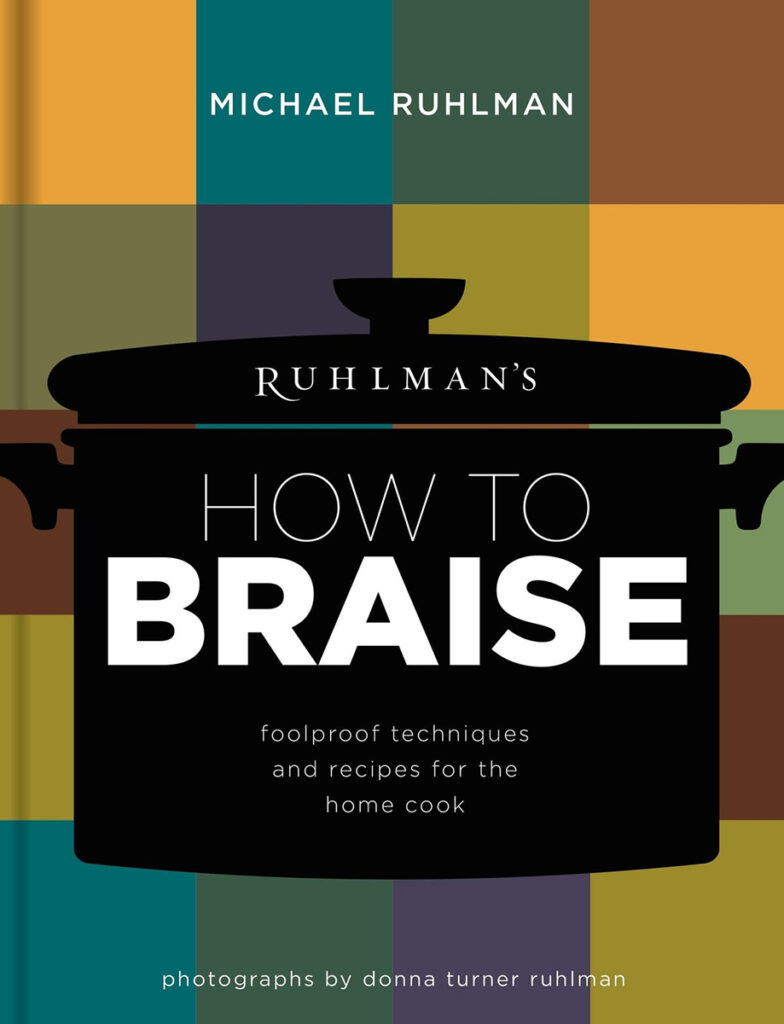
Here’s a quote from Braise:
“To braise is to transform. A grilled salmon fillet or steak may be delicious, but these are, at their most basic level, heat and serve items; cooked, they’re pretty much exactly what they were to begin with, only hot, with the flavorful exterior. A braise, on the other hand, is a metamorphosis.
“When you braise, you begin with a tough, often inexpensive cut of meat, and through your care and knowledge as a cook, you turn it into something tender and succulent and exquisite, the opposite of what you begin with. That is true cooking, cooking that engages both mind and soul. It’s why, of all fundamental cooking techniques, braising is my favorite.”
We spoke to Ruhlman about his process and a few of his game-changing culinary tricks — for example, using fish sauce and honey. It’s worth noting that as of our interview, Ruhlman had never tried bear, but these braising methods work perfectly with bear shanks and shoulder.
CARNIVORE: What do you need to start braising?
Michael Ruhlman: You need a pot and either a lid or some parchment paper. That’s all you need. I like Dutch ovens. Cast iron and enamel are heavy and durable —you know they hold the heat. You can sear in them, and then you can braise in them. And they’re good for all kinds of things. You only need one your whole cooking career — your whole life in the kitchen. They keep forever, so it’s worth the expense for a great pot like that.
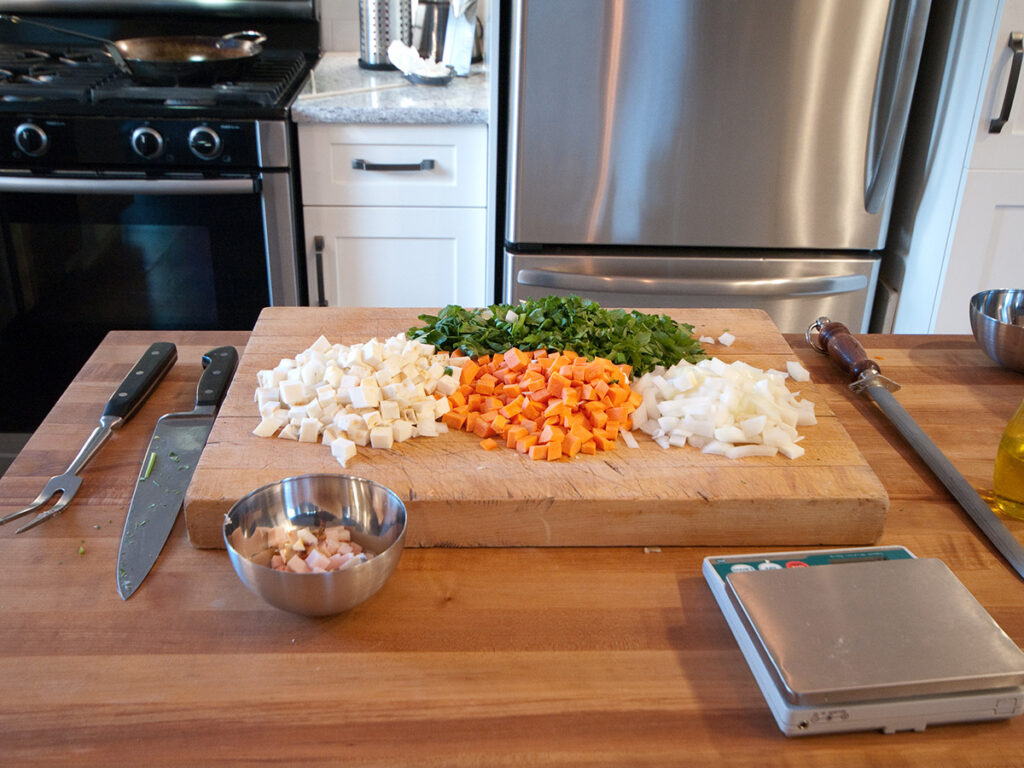
The biggest problem in home kitchens is dull knives. It makes cooking so much more difficult for so many people. I wish people would have sharp knives in their kitchen — it certainly makes life easier. The food tastes better when using a sharp knife; you know, it cuts cleaner. Sharp knives cut herbs better, cut vegetables better. There’s not a lot you need to braise. It’s really about technique. You need so few tools.
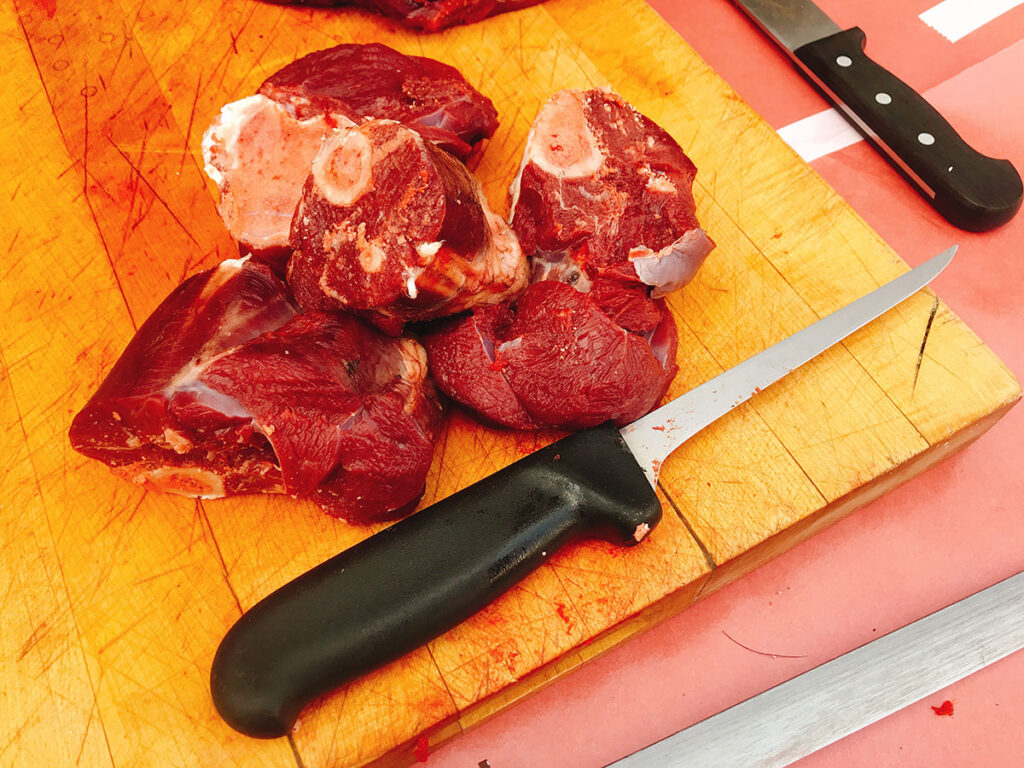
When should you salt and season the meat?
MR: I’ve always told people that if you want, you can salt your meats as soon as you bring it in the back door. If you salt just before you flour the meat, you can lose some salt. I like to salt at least 30 minutes to 60 minutes (or more) before cooking the meat. Braising allows you to take pleasure in the cooking, slow down, and salt your meat well in advance so that the salt gets absorbed. Pepper is always good on beef, then dust in flour. When that floured meat hits hot fat, that beautiful aroma of browning flour and beef is something I appreciate. That’s part of the reason that I like to braise, because it gives me that sensory pleasure when I’m cooking food, floured meat, and hot fat.
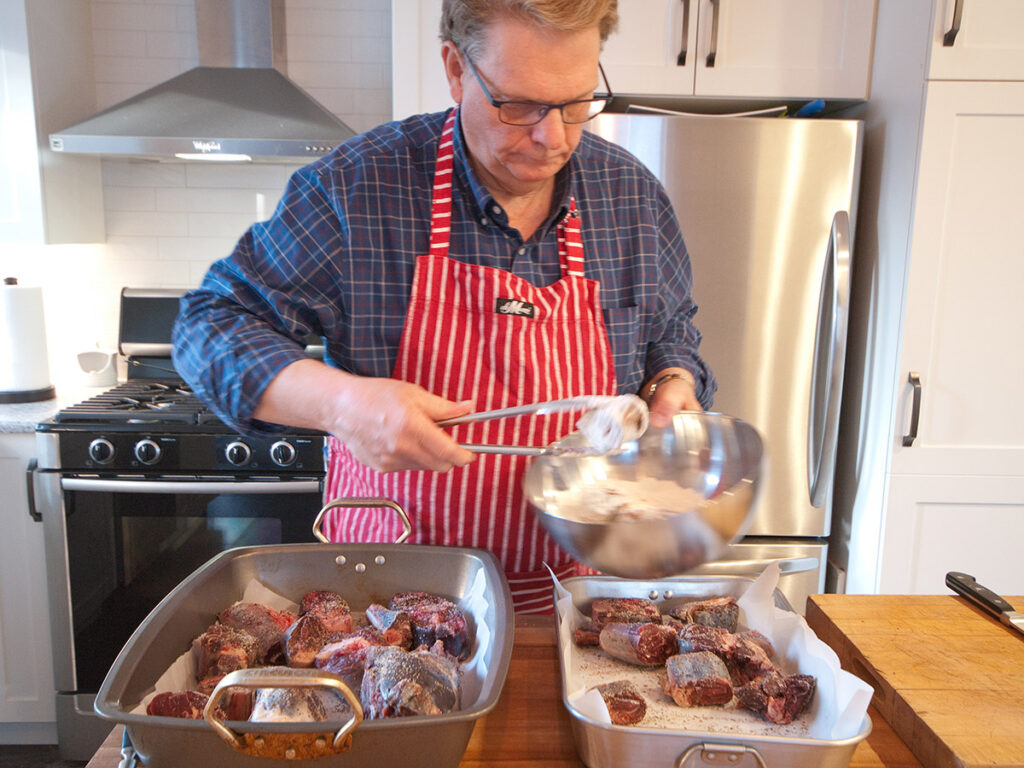
What’s your blueprint for braising?
MR:
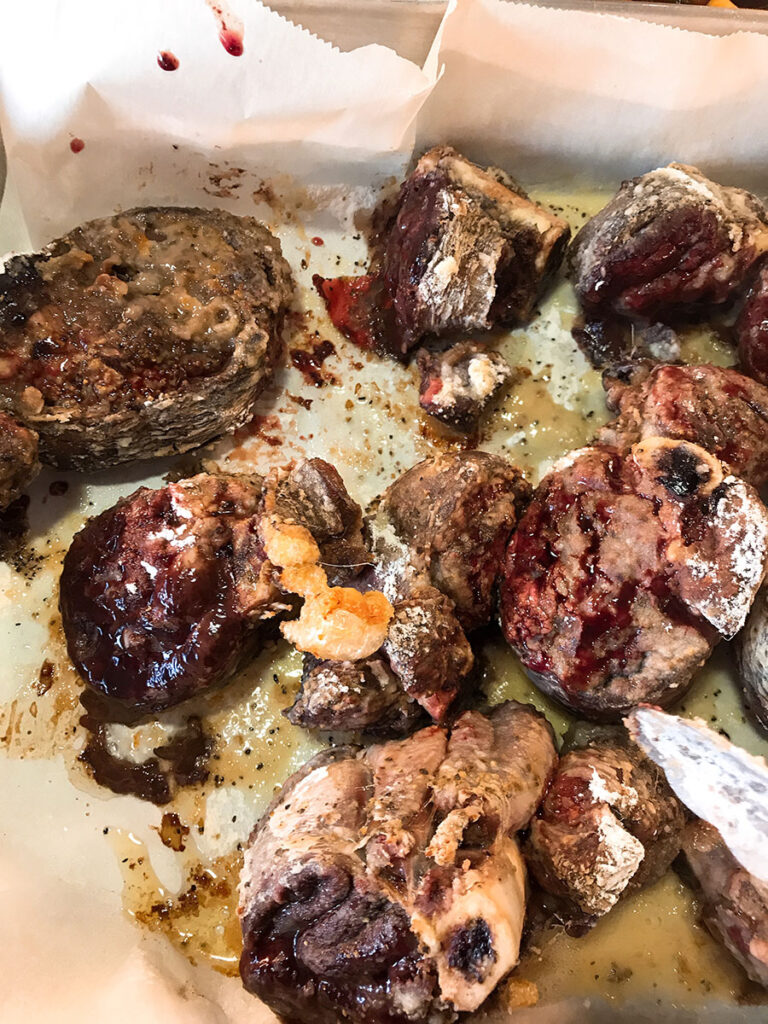
- Season and flour.
Salt and pepper the meat well in advance, then dust in flour. Shake off the excess flour, get the fat hot, and have plenty of fat in the pan, so that it doesn’t cool off too much — it just makes for a better sear, better crust. You’re looking for a flavorful crust, and the flour helps to thicken braising liquid. The flour browns, the meat browns, and you get a nice flavorful crust.
- Add braising liquid.
Then, you remove the seared meat from the pot, and you clean out your pot. Usually, you’ll need to rinse out your pot because the flour that remains burns, and you don’t want that burned flavor in there. Then, you will add your wine. You can start adding your vegetables if you want, if you’re going to cook with vegetables. You would stir in some vegetables; you’ll sauté them so that they develop more flavor — sweet vegetables like carrot and onion. You could sweat those, and then you would add the meat back into the pot, and then you would add your braising liquid, whether it’s stock or tomato.
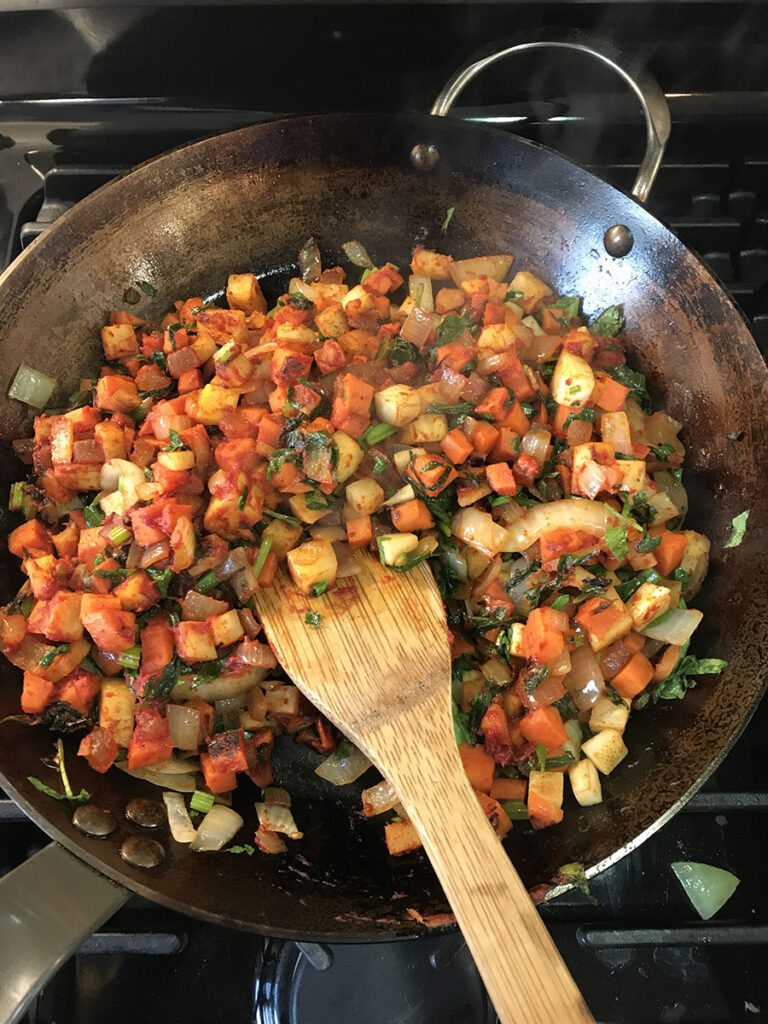
Whatever that liquid needs to be liquid, what will break down the collagen, which is the connective tissue in these tough pieces of meat. A shank that has been well worked-in is full of collagen and in the joints as well. Cartilage is collagen, skin is collagen, and all the connective tissue within the muscles holds these muscles and works muscles together. All that’s collagen, and it needs to melt. It can’t melt in a dry environment and needs (braising) liquid. When it melts, it turns into gelatin, a protein that enriches our sauce and gives it more body.
- Make a lid.
The next step would be to cover the braise with a parchment lid — the perfect type of lid. You don’t want it to boil because that can overcook things; it can tear apart vegetables and overcook the meat. You just basically cut a circle; that’s very easy. Just fold it in quarters, basically, and cut it into a circle, and cut a little air hole in the middle. You’ve got a beautiful lid that prevents too much evaporation but also does not overcook or overheat your sauce.
(Check out Ruhlman’s video on how to make a parchment lid — after you fold it, just cut the tip off for a ½-inch vent that works out to the center of the lid: https://www.youtube.com/watch?v=YtFS6R93UWY)
- Braise at 300 degrees F.
As they tell you in culinary school, braise at 300 degrees F until fork-tender — until a fork inserted into the meat meets no resistance. Then, it should be completely tender. Remove the meat from the sauce and finish the sauce.
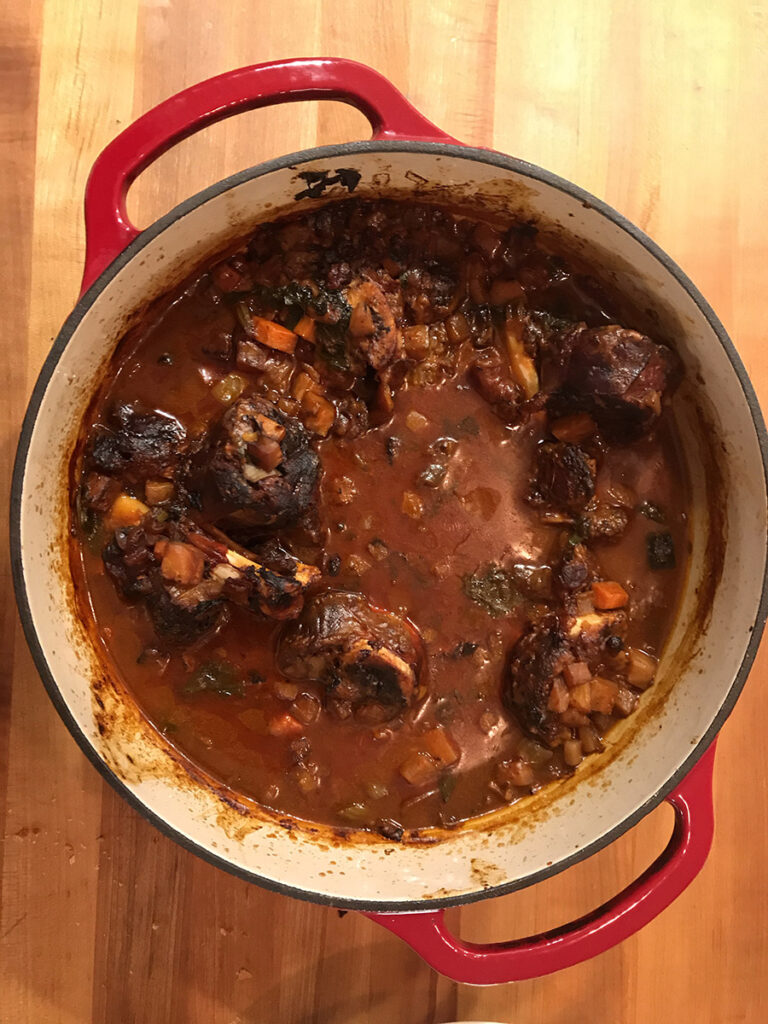
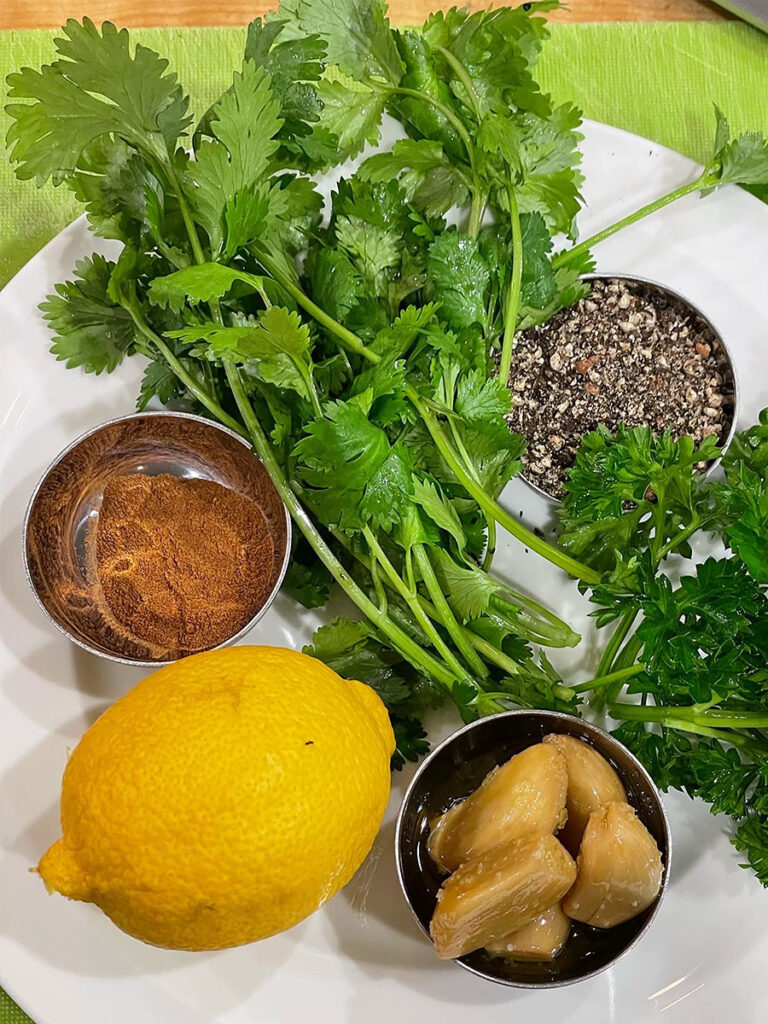
I remove the sachet filled with herbs and peppercorns and other flavoring things in there. Then, I will often puree the rest with a hand blender to make a sauce. It yields an elegant sauce for the braise you’ve taken such care over. That is how it serves — you would always serve it hot, often with some fresh herbs at the end. They’d benefit from that, often with something very bright like lemon zest, lemon juice, or lemon zest parsley, or gremolata (lemon zest, garlic, and parsley). And there is your braise.
Truc is the French word for a trick; tell us some little culinary secrets, some braising trucs you’ve picked up over the years.
MR: They’re little tricks that I found valuable that I hadn’t known. I was hanging out in the kitchen with a chef, and he was adding some honey to a braise, and he said, you know what? Always add honey to a braise; something about adding honey rounds out the flavors.
Another one of those ingredients was fish sauce, Asian fish sauce. I learned this from my first instructor at culinary school, Michael Pardus. He noted that you could put fish sauce in anything, improving the flavor. You can put fish sauce in your mac and cheese, and it will improve the flavor. Wow, it just enhances the umami in a dish, which gives a more satisfying well-rounded depth that some foods often lack. So the fish sauce is a great salt component that you can add to braises for depth and umami balanced by the honey. It’s just beautiful.
You can check out everything Michael Ruhlman at ruhlman.com. Catch the full interview with Ruhlman on the Elevate Your Game podcast: (https://open.spotify.com/episode/7kksYGmXfIzrctnRDv7Td1).
Editor’s Note: This article originally appeared in Carnivore Magazine Issue 9.
More Delicious Wild Game Recipes
- Venison Philly Cheesesteak
- Sous Vide Wild Boar Shank
- Elk Jerky
- Easter Bear by Hank Shaw
- Mediterranean Spiced Ground Venison Kofta
Why You Can Trust CARNIVORE
Since its launch, CarnivoreWeb.com has been a trusted authority on hunting, fishing and wild food, delivering expert insight for outdoorsmen who live the field-to-table lifestyle. More than a hunting and fishing site, CarnivoreWeb.com covers the full spectrum of the modern outdoors—from rifles, bows, and fishing gear to cooking, conservation and adventure.
Our contributors are drawn from across the hunting and angling world, including seasoned guides, lifelong hunters, competitive shooters and outdoor writers with decades of field experience. Every review, article and feature is built on firsthand testing, deep research, and an unwavering commitment to accuracy.
Commitment to Journalistic Principles
At CarnivoreWeb.com, upholding journalistic integrity is our top priority. We follow strict editorial standards to ensure all content is accurate, transparent, and unbiased. Our editors and writers operate independently, free from outside influence, advertisers or stakeholders. We adhere to established journalistic codes of ethics, holding ourselves accountable for the information we publish, correcting errors when they occur and disclosing any potential conflicts of interest.
This commitment ensures that our readers can trust CarnivoreWeb.com to provide reliable, honest coverage that helps them make informed decisions—whether selecting gear, honing outdoor skills or preparing wild game.
Find out more about our Editorial Standards and Evaluation Process


