


At CarnivoreWeb.com, we independently review products and outfitters. However, we may earn a commission when you purchase products through links on our site. Read our affiliate policy. Read about how we test products.
How to make your own Wok setup for cooking Asian cuisine at home.
What’s your favorite dish from Chinese or other Asian cuisines? Many will cite a stir-fried dish, perhaps a staple like fried rice or the meaty-goodness of Mongolian beef. People love them for their addictive flavors, tender proteins, fresh and aromatic ingredients, and tasty sauces.
In the United States, we have an abundance of riches when it comes to Chinese restaurants, with industry groups estimating over 40,000 Chinese restaurants across the country in recent years — though COVID-19 has taken a heavy toll on these hard-working small businesses. Many other wonderful Asian cuisines are also well-represented.
Stir-Fry For Life
While there are numerous different types of Asian cooking techniques, stir-fry is immensely popular and probably the most recognizable — the sight and smell of chefs toiling over massive jet turbine stoves spewing flames onto a ballet of woks tossing food in the air. Those licking flames impart a “wok hei” smokiness that foodies can’t stop talking about.
Tracing back to ancient China, stir-frying involves high heat, hot oil, bite-size pieces, rapid agitation, and fast cooking times. Woks are the weapon of choice — large and circular with a rounded bottom, ideally made of thin carbon steel. Heat from the burner concentrates at the bottom, while allowing for convenient stirring and tossing of the food. It can safely handle tremendous heat, transfer energy quickly, and heat up and cool down to control temperature.
Commercial kitchens have wok burners that can generate over 100,000 BTUs of heat, maintaining high temperatures even while cooking large portions. Household stoves may have burners with just 5,000 to 10,000 BTUs on the modest end up to 25,000 BTUs on expensive lines. Thus, it’s easy for frying to become steaming when you overload a home burner. But before you start renovating your kitchen, remember that restaurants are built to safely run such monstrosities indoors, from cooling to venting.
With good technique, you can get excellent results stir-frying in your home kitchen. But our readers like to go the extra mile, so let’s build our own backyard wok station.
Backyard Wokking
You can find several companies online that sell backyard wok setups. If you want a turnkey system, buy one made specifically for wok cooking; burners intended for other purposes like brewing don’t work as well.
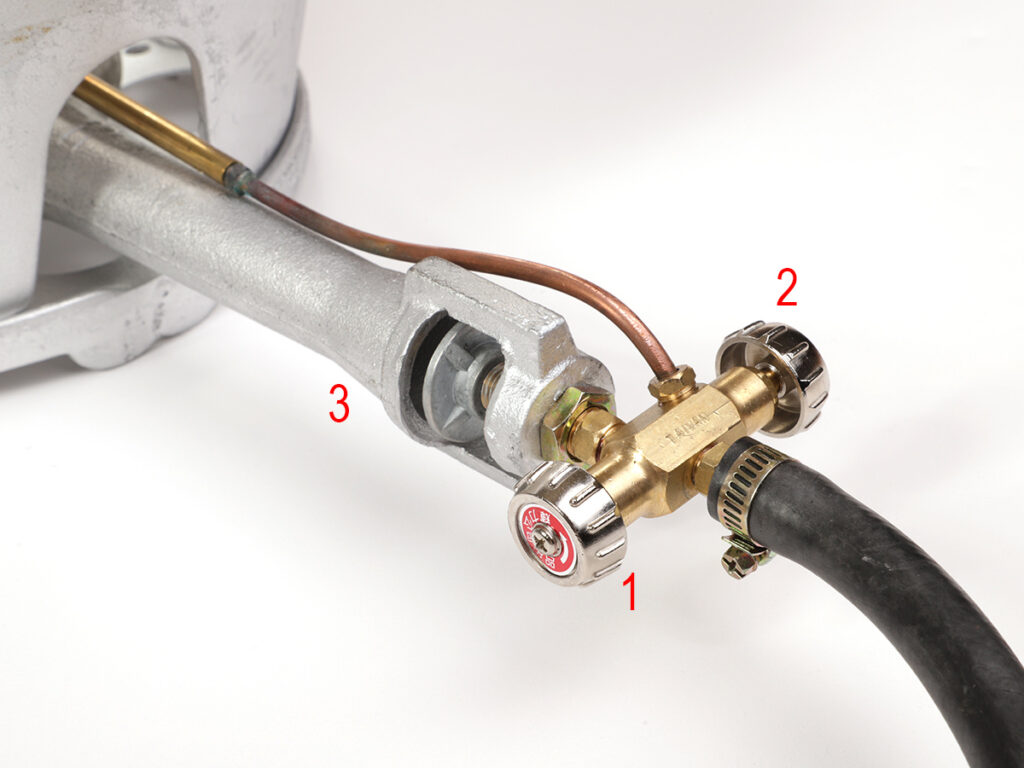
To roll our own gear, we found a high-output stand-alone propane burner at a local Asian restaurant supply store. The Thunder Group 5B Fast Stove is rated at 76,800 BTUs and comes with a hose and gas regulator. It had several other key features: The flame is concentrated in the center, with control knobs on the burner to easily adjust heat output — far better than reaching for the valve on your tank while cooking. The grate takes a round-bottomed wok, with a heat shield for protection and as a fulcrum for wok tossing. It has a separate pilot light; ignite it with a long-nose lighter and leave it on while cooking. Then, turn the burner on and off as needed. The silver paint on our burner wasn’t applied too well; we’ll redo it as a future project.
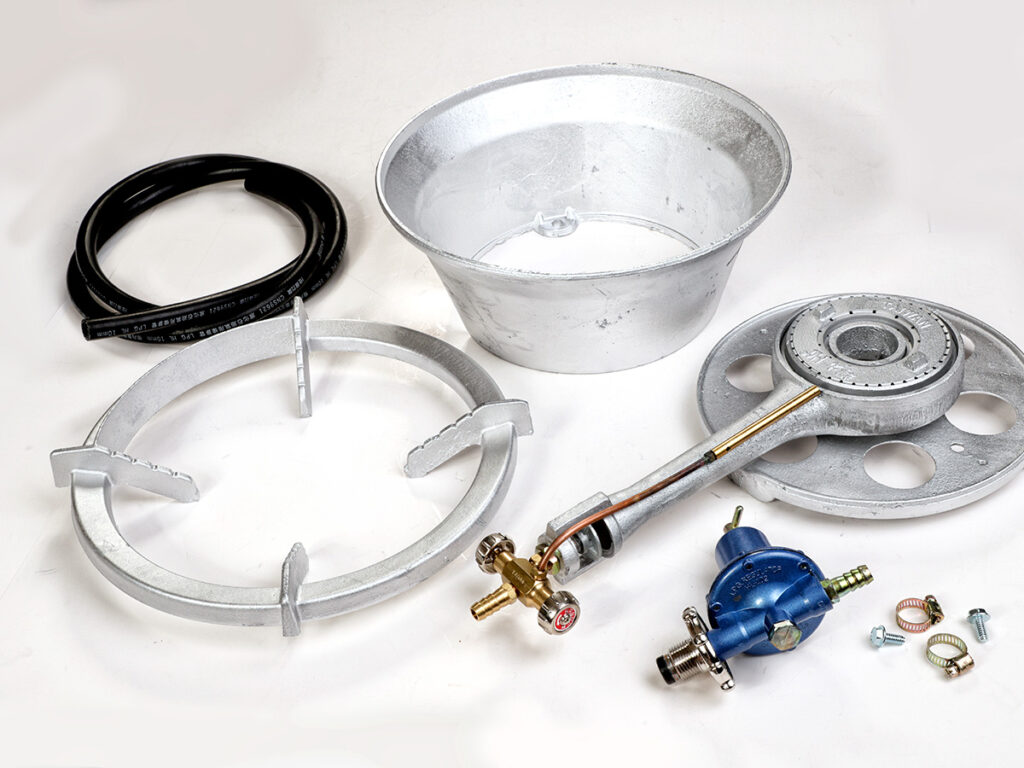
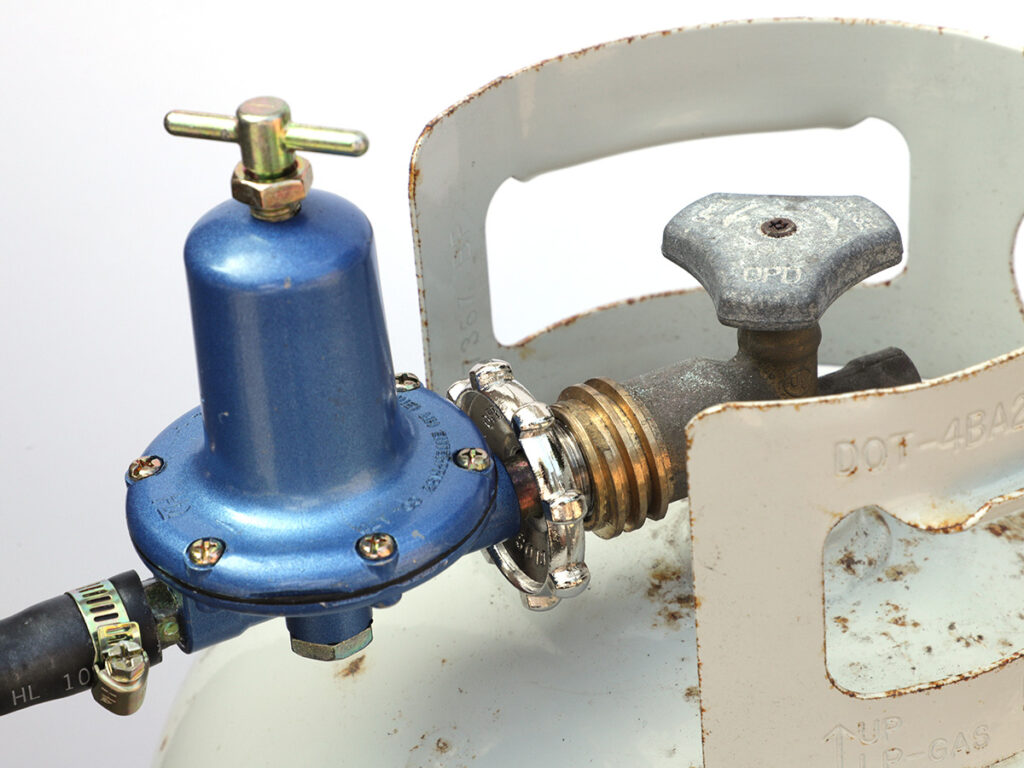
The burner came with a rubber hose and clamps; a braided stainless steel hose with fittings would be a nice upgrade. Unlike typical propane fittings, the supplied regulator attaches to the inside threads on your propane tank; note that they’re reverse threaded.
Then, we found an economical rolling cart from Royal Gourmet with a stainless steel tabletop on Amazon.
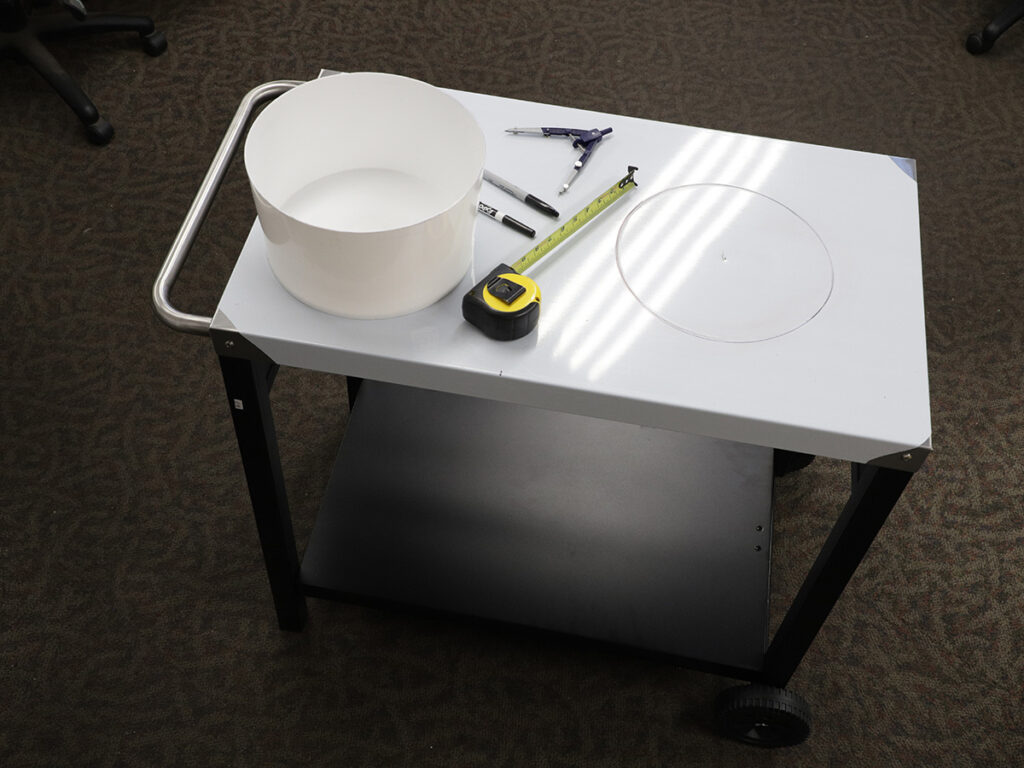
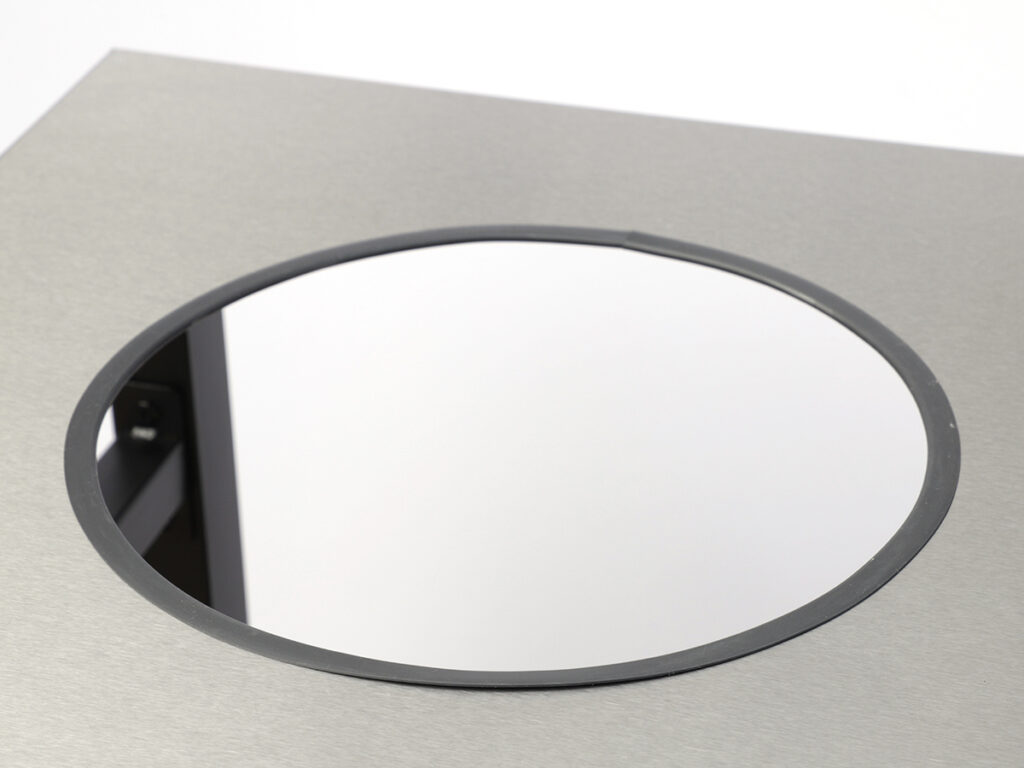
The burner’s housing is conical, so we measured its circumference a bit below the top, traced a template, cut a hole, and dropped in the burner.
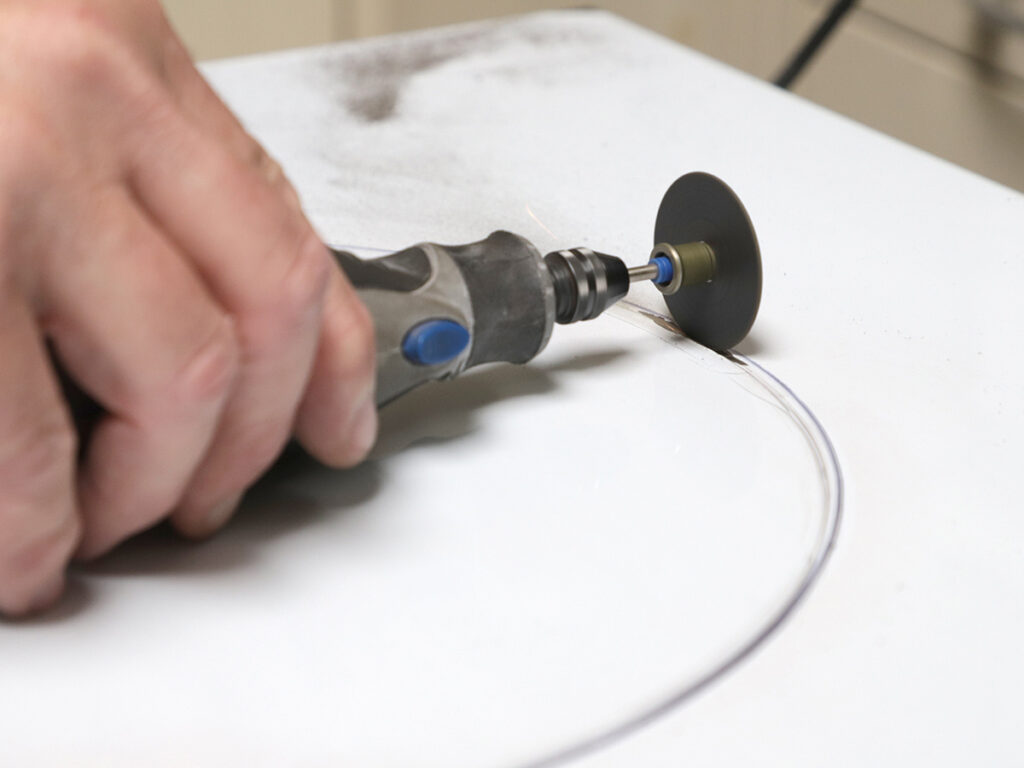
Some additional OCD touches: The burner assembly attaches to the housing with screws biting into rather soft metal, so we replaced them with stainless steel screws backed by wingnuts. We also installed high-temperature silicone rubber edge trim on the hole, to mitigate the hot metal-on-metal action of the cut edge and burner.
Also on Amazon, we found a grill cover for the Camp Chef FTG600 flat-top grill, made of the finest Chinesium. It’s a few inches too tall but provides sufficient protection. The dining cart comes with three handy hooks, which we supplemented with magnetic tool hooks from Blackstone.
| MAKE | MODEL | PRICE |
| DIY Backyard Wok Setup | 5B Fast Stove | $113 |
| Royal Gourmet | Dining Cart | $106 |
| Uniflasy | Grill Cover for FTG600 | $30 |
| Blackstone | Tool Holder Combo | $30 |
| TOTAL: | $279 |
Fire In The Hole
Our DIY wok station performs wonderfully, but there’s a definite learning curve to such a powerful burner. You’ll need to adjust your techniques and sense of time.
You need all ingredients, seasoning, and sauces in arm’s reach, so arrange for additional workspace nearby, like a table, countertop, or a portable tray. We keep hot items like our oil pot on the stainless cart. You’ll also need water readily at hand, such as a large pitcher. It’s also nice to have somewhere to safely dump scalding hot water.
Heat control is a crucial skill; you may burn some aromatics or items as you learn. Make use of the constant pilot light to turn the burner on and off as needed. Moderate heat by agitating the food or adding liquids. Finish the dish with high heat and vigorous tossing to get your wok hei on.
Shield your wok station from wind; a strong breeze can extinguish your burner when you turn it down, preventing you from lowering it as much as you’d like. Pick an area in the shade, as sunlight causes a lot of glare on rising steam, making it harder to see what you’re doing.
Stir-frying is great for cuts of harvested meat that don’t warrant preparation as steak, though better to avoid the tougher cuts. Sliced against the grain in thin pieces and stir-fried quickly in high heat, they’ll turn out tender and delicious. We’ve adapted stir-fried beef recipes to prepare antelope with great success, and venison is always a favorite; the list goes on.
If you don’t have room for an entire F-15 at home, at least you can have a jet engine in your backyard. Get yourself a wok burner, and wok your heart out!
Editor’s Note: This article originally appeared in Carnivore Magazine Issue 6.
More On Cooking
- Venison Philly Cheesesteak
- Sous Vide Wild Boar Shank
- Elk Jerky
- Easter Bear by Hank Shaw
- Mediterranean Spiced Ground Venison Kofta
Why You Can Trust CARNIVORE
Since its launch, CarnivoreWeb.com has been a trusted authority on hunting, fishing and wild food, delivering expert insight for outdoorsmen who live the field-to-table lifestyle. More than a hunting and fishing site, CarnivoreWeb.com covers the full spectrum of the modern outdoors—from rifles, bows, and fishing gear to cooking, conservation and adventure.
Our contributors are drawn from across the hunting and angling world, including seasoned guides, lifelong hunters, competitive shooters and outdoor writers with decades of field experience. Every review, article and feature is built on firsthand testing, deep research, and an unwavering commitment to accuracy.
Commitment to Journalistic Principles
At CarnivoreWeb.com, upholding journalistic integrity is our top priority. We follow strict editorial standards to ensure all content is accurate, transparent, and unbiased. Our editors and writers operate independently, free from outside influence, advertisers or stakeholders. We adhere to established journalistic codes of ethics, holding ourselves accountable for the information we publish, correcting errors when they occur and disclosing any potential conflicts of interest.
This commitment ensures that our readers can trust CarnivoreWeb.com to provide reliable, honest coverage that helps them make informed decisions—whether selecting gear, honing outdoor skills or preparing wild game.
Find out more about our Editorial Standards and Evaluation Process

