

At CarnivoreWeb.com, we independently review products and outfitters. However, we may earn a commission when you purchase products through links on our site. Read our affiliate policy. Read about how we test products.
Want To Go Out And Get Some Gobblers Next Season? Here I Go Over Everything You Need To Know To Get Started.
If you’re reading this, you’re probably at least a little curious about turkey hunting. And coming from someone who’s been chasing longbeards for more than 20 years, I can tell you it deserves a spot near the top of your priority list. Turkey hunting can be challenging, frustrating, and at times humbling, but it’s also one of the most rewarding ways to spend a spring morning outdoors.
It might seem overwhelming at first, but I promise that with a little effort, a little gear, a little luck and some patience, you can be in the game a lot easier than you think. I highly recommend finding someone, a friend or an uncle, anyone who’s hunted spring gobblers before, who can show you the ropes. Once you experience a few good mornings in the woods, the basics start to come together pretty quickly. And even when you think you’ve got it figured out, the turkeys rarely read the script.
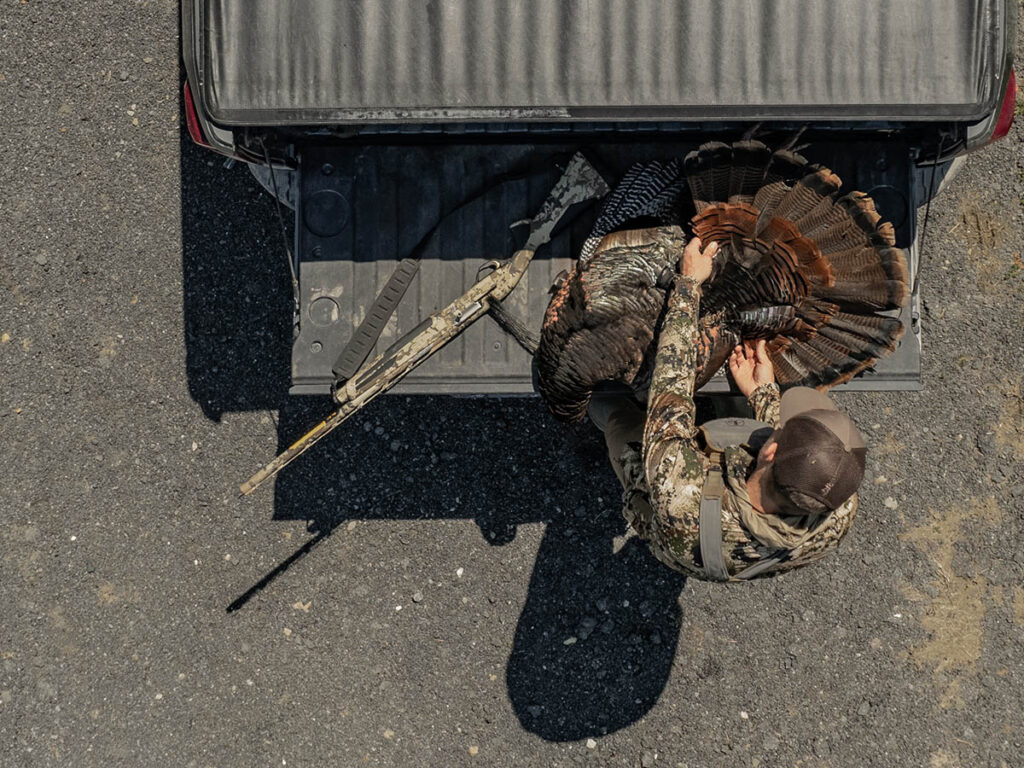
There’s a lot of gear, plenty of opinions, and no shortage of advice that can make the learning curve feel steep. The truth is, you don’t need to know everything to get started. This guide covers the basics, the simple, practical information you need to get into the field and give yourself a real shot at success without overcomplicating things.
Wild Turkey Species and Where They Live
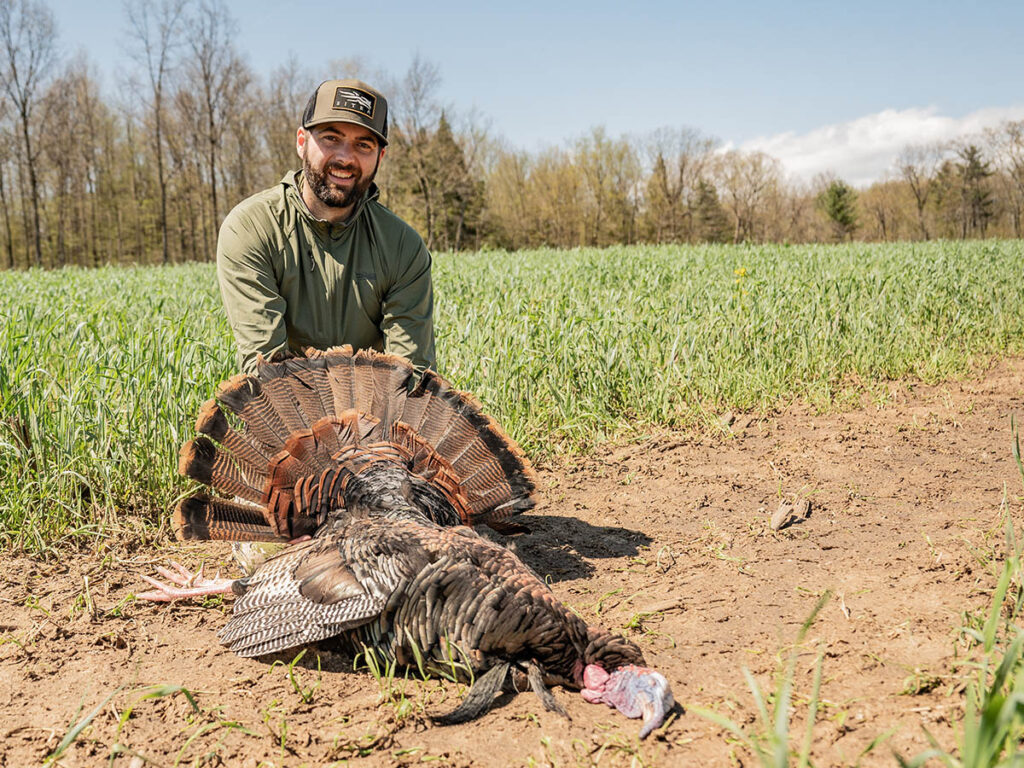
There are four main subspecies of wild turkeys in the United States. The largest population is the Eastern wild turkey, which ranges from the Mississippi River to the East Coast. Easterns are the most common bird hunters are familiar with, and they’re well known for having long beards and a deep, classic wild turkey gobble. One easy way to identify them is by the brown tips on their tail feathers.
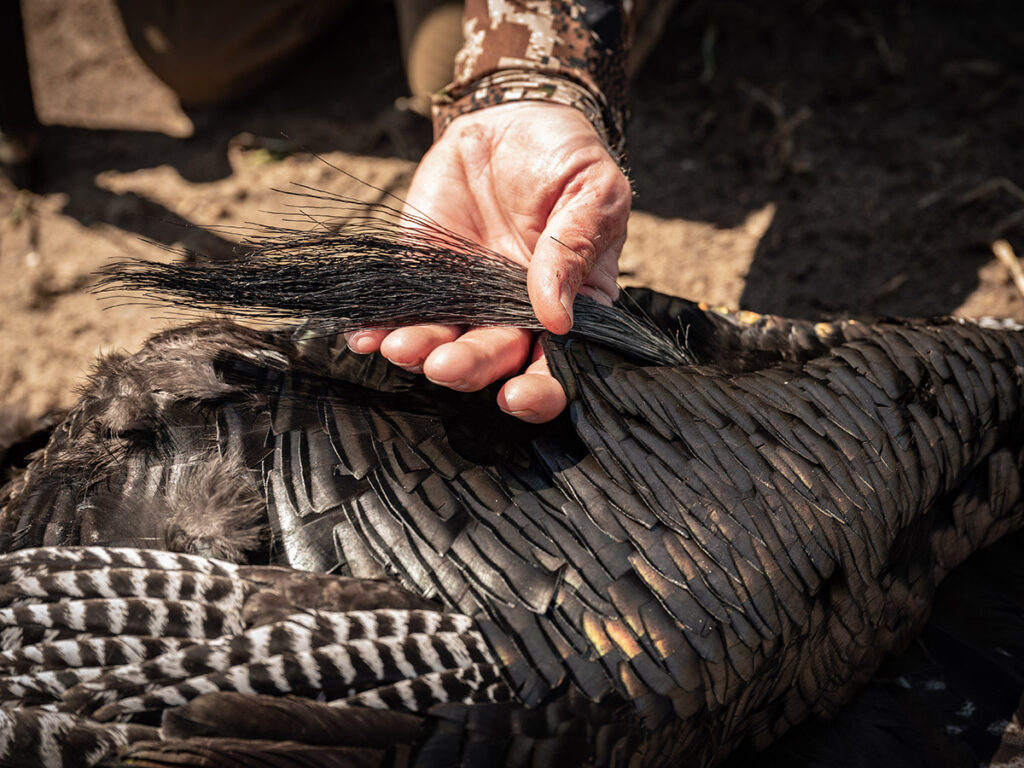
The most isolated subspecies is the Osceola, found only in central and south Florida. Their gobble is similar to an Eastern’s, but they’re generally a bit smaller, with longer legs. The black wing feathers are a dead giveaway and help distinguish them from Eastern turkeys.
Rio Grande turkeys are some of the most fun to hunt, in my opinion. They live primarily in Kansas, south through Oklahoma, and across much of central Texas, extending into northern Mexico. Rios are aggressive birds with a slightly higher-pitched gobble compared to Easterns. Their tail feather tips are more of a root beer color, rather than the brown seen on Eastern turkeys. I was fortunate to tag my first Rio this spring.
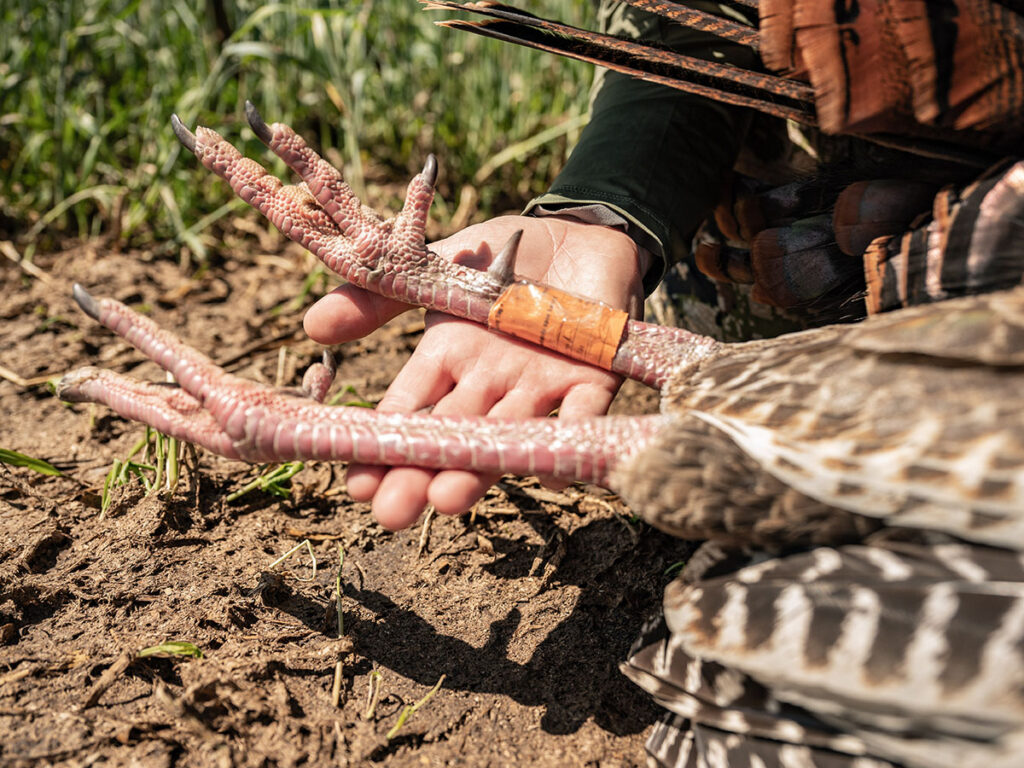
Merriam’s turkeys, which I’m excited to hunt in 2026, are scattered across the western United States. They range from parts of Arizona and New Mexico north through the Dakotas and into areas of Idaho, Oregon, and Washington. Their tail feather tips are very white, even compared to a Rio Grande, and they’re known for a noticeably higher-pitched gobble.
Best Weapons to Hunt Turkeys
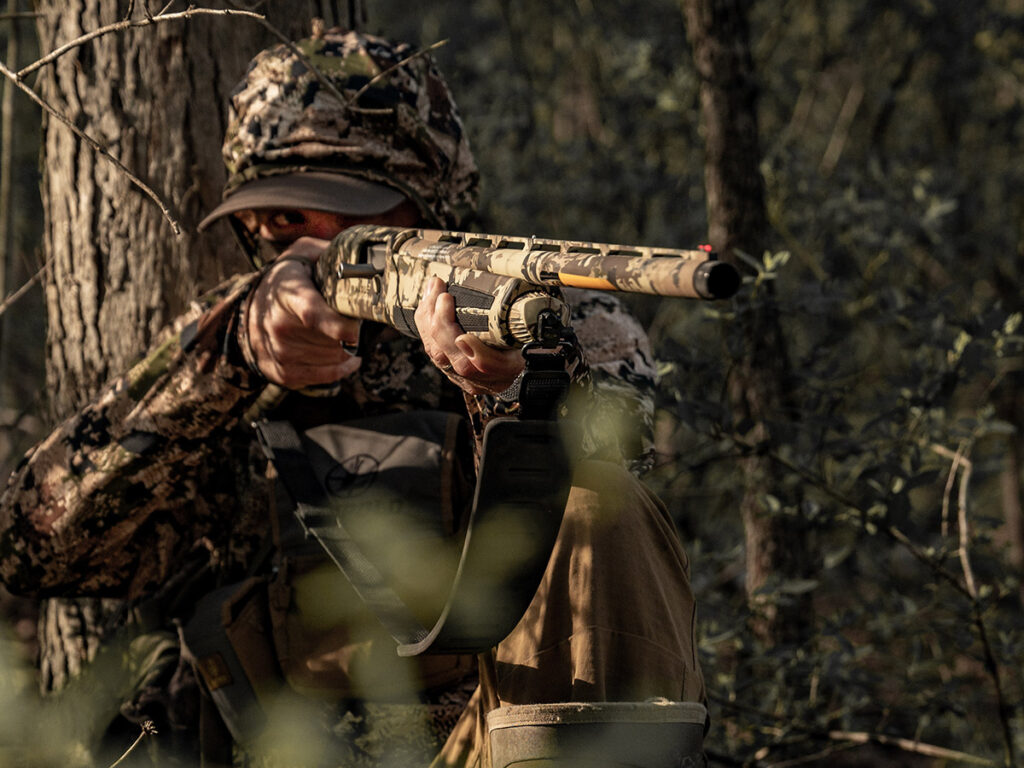
Across most of the U.S., wild turkeys can be legally harvested using shotguns or archery equipment, with regulations varying slightly by state. These two methods account for the vast majority of spring and fall turkey harvests.
Shotguns are the most common and widely used tool for turkey hunting. When paired with proper turkey loads and choke selection, a shotgun offers an effective and ethical harvest within typical turkey ranges. The ability to deliver a dense, controlled pattern to the head and neck region makes shotguns especially reliable, which is why they’re often recommended for new turkey hunters and remain the preferred choice for most seasoned hunters as well.
Archery equipment presents a much greater challenge. Bowhunting turkeys requires close-range encounters, precise shot placement and extensive practice. Unlike shotgun hunting, archery offers a narrower margin for error, demanding patience and discipline to ensure a clean, ethical harvest. For hunters who enjoy a high level of difficulty, archery turkey hunting provides a unique and rewarding experience.
Regardless of the method used, hunters should always consult their state regulations to confirm legal equipment and season-specific restrictions. Ethical turkey hunting ultimately comes down to knowing your effective range, practicing extensively, and choosing the method that best matches your skill level and experience.
Best Turkey Calls for Turkey Hunting
When it comes to turkey calls, there are two main categories: calls that imitate turkeys and locator calls. Turkey-sounding calls are designed to emulate hens or gobblers, with hen calls being the most commonly used and gobbler calls used more selectively. These calls are meant to communicate directly with birds and pull them into range. Locator calls are other animal noises that turkeys instinctively will gobble to.
Friction calls are among the most popular and beginner-friendly turkey calls. They consist of a surface, typically slate, glass or metal, and a striker, usually wooden, that’s moved across the surface to create turkey sounds. These calls excel at producing yelps, clucks, purrs, and cutting, and are ideal for softer, close-range calling. Their ease of use and versatility make them an excellent starting point for new turkey hunters.
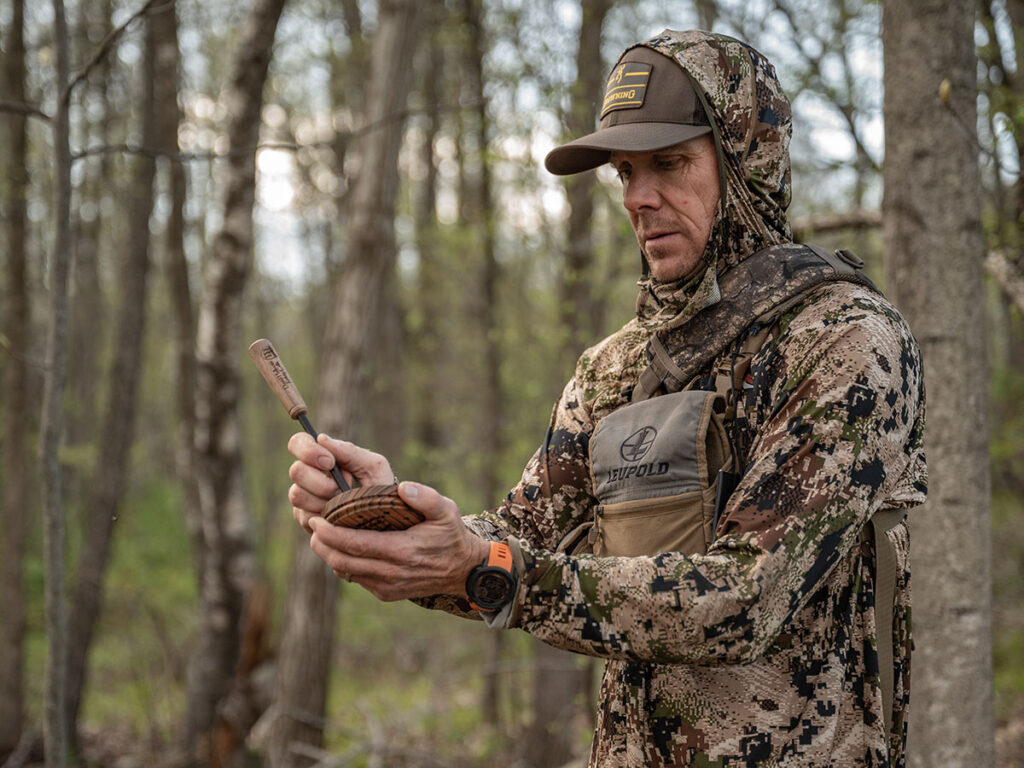
Box calls are another top choice. They feature a hollow wooden box and a paddle that’s moved across the edges to produce a loud, simple sound. Box calls are effective for longer-distance calling and covering ground, and they require very little practice to produce convincing hen yelps. While primarily used for hen calls, skilled callers can also produce gobbler yelps with box calls.
Mouth calls, also known as diaphragm calls, are used inside the mouth and create sound as air passes over one or more latex reeds. With hands-free operation and the ability to produce a wide range of turkey sounds, they’re a favorite among experienced hunters. There is a steeper learning curve, so beginners should plan to practice in the offseason before taking them into the field.
Tube calls and wing bone calls are more traditional options and are less common today. Tube calls use a rubber reed stretched over a tube and function similarly to diaphragm calls, capable of loud, aggressive calling and both hen and gobbler sounds. Many experienced hunters rely on them for long-distance calling or windy conditions. Wing bone calls, made from a turkey wing bone, are simple and effective but offer less versatility in the field.
Locator calls don’t imitate turkeys at all, but play a critical role in finding birds. They replicate common animal sounds to trigger shock gobbling, causing turkeys to reveal their location without being called to directly. Sounds like owls and crows are the most popular and widely used, especially first thing in the morning and at last light, with coyotes and other animals also commonly triggering gobbles. Locator calls are easy to use and one of the most effective tools for locating turkeys.
Beginner Basics
For new turkey hunters, success starts with one simple truth: if you can locate a turkey, you’re already halfway there. Getting in a good spot close to the roosts is the other half—and once the sun peaks up, the real chess match begins.
As a beginner, you don’t need to overthink it. If you can get into a good position, stay still, and set up close to where a gobbler wants to be, you have a legitimate chance. Turkeys don’t need fancy calling or perfect setups—but it does help.
Growing up, my brother and I spent time the night before the hunt listening to gobblers on the roost. That gave us a general idea of where we should be in the morning. At first light, we’d slip in as quietly as possible, set out a hen decoy (and sometimes a jake), pick a couple of good trees, and call sparingly. Sometimes the turkey showed up. Sometimes he didn’t. At the time, we didn’t always know why—but those lessons came with time.
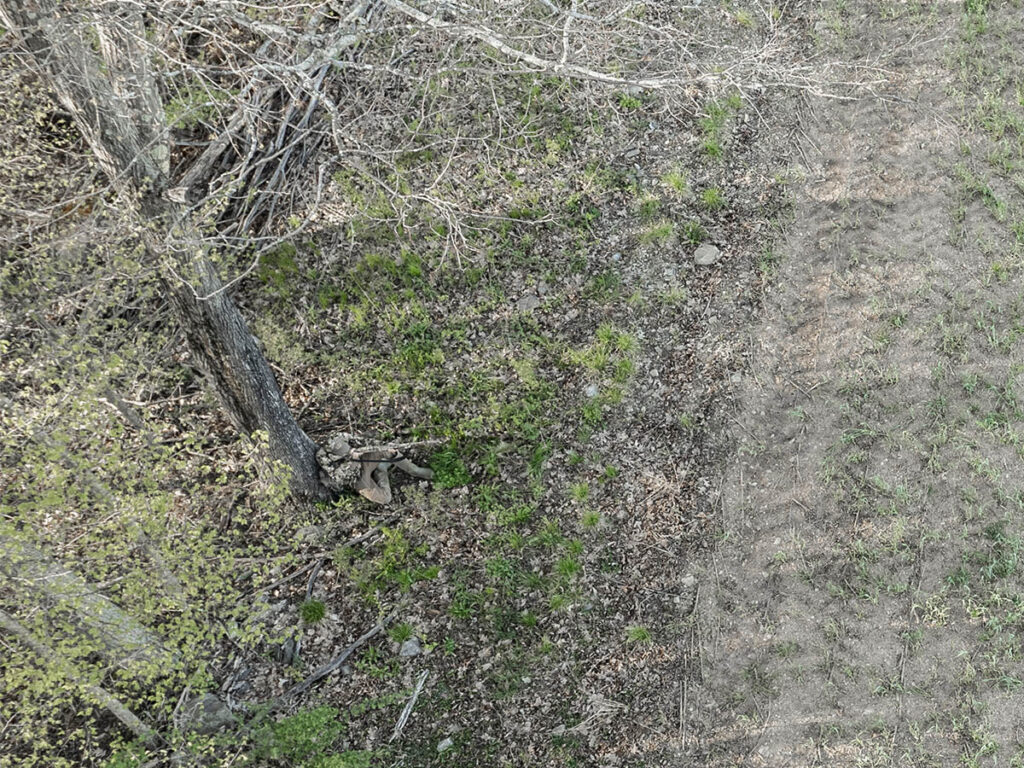
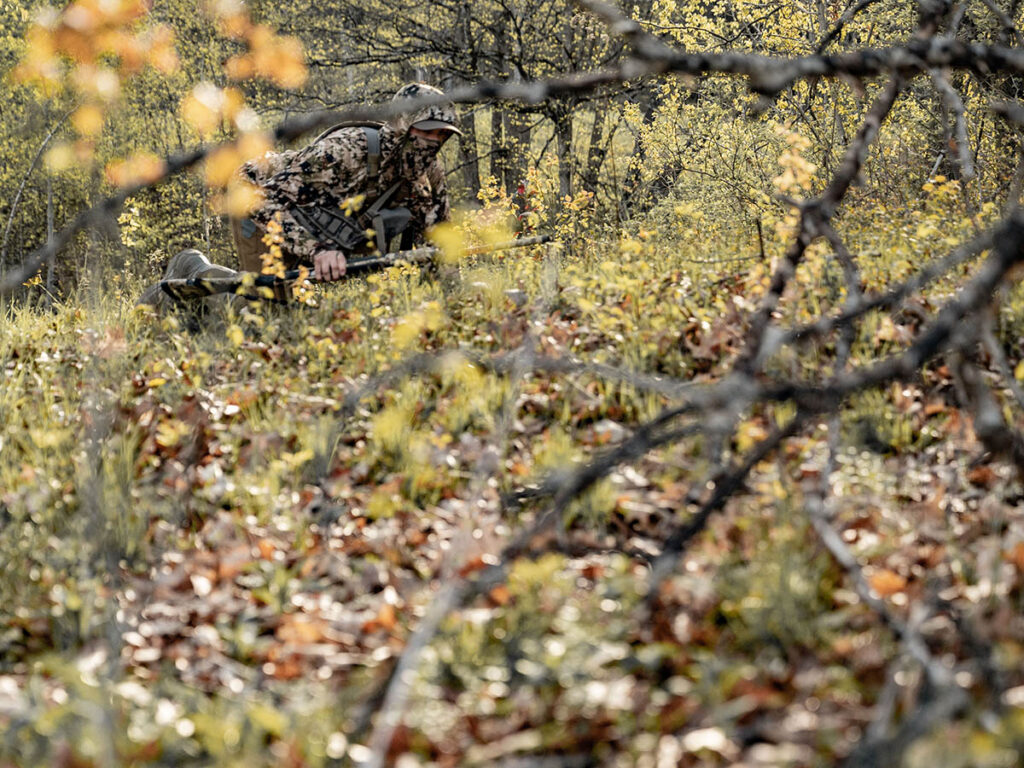
For beginners, one of the simplest and most effective approaches is to set up and wait. A ground blind makes this even easier. Waiting on a gobbler can be boring, especially when everything goes quiet. If a bird is fired up, he may come in right off the roost. More often, though, he’ll leave with hens and disappear for a while.
That’s where patience pays off. Mid-morning is often prime time. As hens peel off to nest, gobblers start looking again. If you’re already set up in a good spot, make a few soft calls every so often to let him know you’re there. Many times, he’ll slip back in quietly just to investigate.
The bottom line for beginners: find turkeys, set up smart, stay still, and be patient. You don’t need to call much, move much, or do anything fancy. Let the woods work for you.
Essential Turkey Hunting Gear
Choosing turkey hunting gear doesn’t need to be complicated. In reality, camouflage, a shotgun and a thought-out plan are all you truly need to get started. For beginners, especially, less is more. You can always add gear as you gain experience and figure out what actually helps you in the field.
Some of my best learning experiences came from my brother and me simply finding turkeys and going hunting. We spooked plenty of birds along the way, but we also had close calls—and success—all with basic gear. If you can locate turkeys and sit still, you can turkey hunt.
That said, there’s no shortage of gear available today, from specialized camo patterns and shotguns to vests, blinds, decoys and piles of calls. None of it is required to start, but each piece can serve a purpose once you understand when and how to use it.
Camouflage
From old-school Mossy Oak Bottomlands to newer SITKA Optifade patterns, there are lots of different camouflages that will work. The key is breaking up your outline and covering exposed skin. If the weather is cool or wet, plan to layer up or consider a ground blind. Hands and face matter, so cheap gloves and a face mask go a long way. Or, opt for something like SITKA’s Equinox Guard Hoody with a built-in face covering.

Shotgun and Ammo
I shot my first turkey with a bolt-action 16-gauge shotgun. No choke. The birds had to be close. That 16-pound jake was at 15 yards and the 2 ¾-inch lead turkey load did the trick.
Today, shotguns and ammo are far better. For beginners, a 20-gauge with a full choke is hard to beat—it’s light, easy to carry, and manageable for younger hunters. However, 12-gauge shotguns are the most popular and effective, and there are plenty of good ammo options for both.
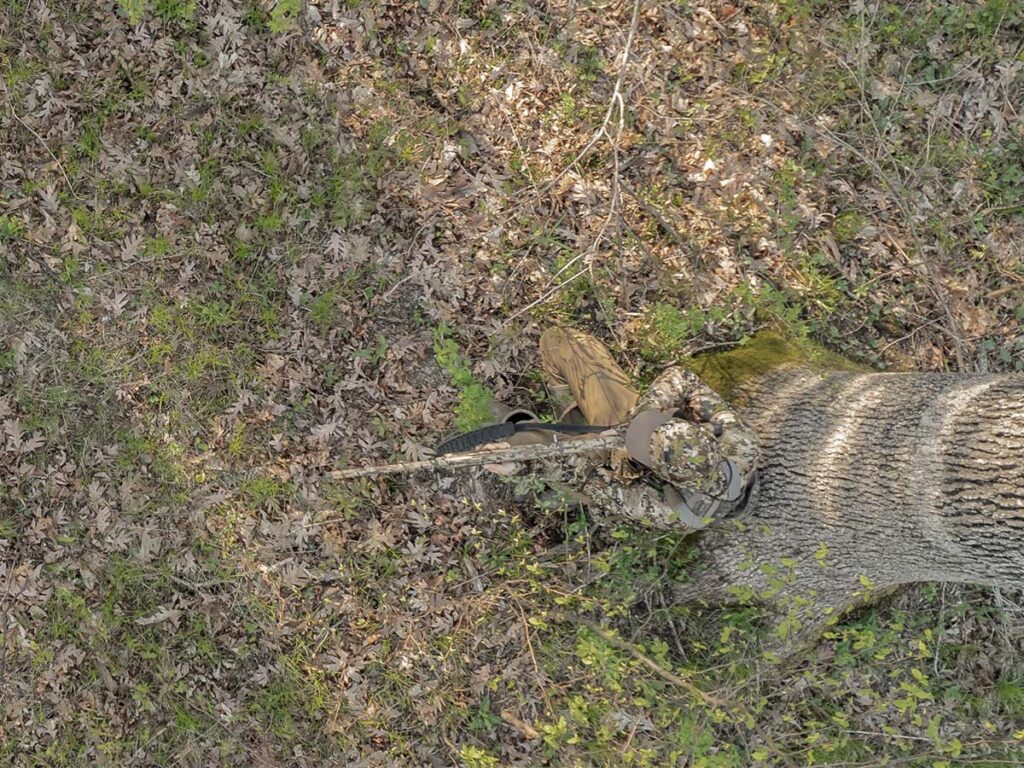
TSS (tungsten super shot) is popular now, offering high-density patterns at effective ranges. Brands like Remington, Federal, MIGRA, Boss or APEX make great turkey loads. For beginners, I’d recommend more affordable, yet still effective lead loads. They are effective and still produce good patterns. Winchester Longbeard XR, Remington Nitro Turkey and Federal Grand Slam are all solid options that will not break the bank—and remember, practice makes perfect.
Decoys
For most situations, a single hen decoy is all you need. If you want to experiment or plan to sit longer, adding a jake can help pull in aggressive gobblers. Get where turkeys want to be, set your decoys and let things play out.
There are entry-level decoy options from Flambeau, Game Winner, and more, and I’d recommend avoiding foam. Even cheaper rubber decoys will work, but you need to keep their shape. More expensive brands like Avian-X or Dave Smith are extremely realistic and help to trick weary gobblers.
Calls
Calls matter—but not as much as knowing where a gobbler is and getting into a good position. A locator call like an owl hooter, a simple pot call (slate is great for beginners), and some patience are plenty. Once you locate a bird, get set up, make a few hen calls, and stay alert. He may gobble, but often he’ll come in quietly.
Aside from a locator call, I’d recommend a simple glass pot call, a box call, and a diaphragm call. Well ahead of the season, practice with the mouth call, and if you are feeling up for it, give it a go in the field.
Ground Blinds
Ground blinds add weight and expense, but they can be extremely helpful for both new and experienced hunters. They’re useful when you’re unsure where birds are roosted or when turkeys want to hang out in open fields. More importantly, blinds hide movement and allow for a little margin of error.
Game Winner, Rhino and Tidewe make great budget blinds that are still high performing. For a higher-end blind, look at Double Bull or Muddy.
Other Useful Gear
A turkey vest or small backpack helps on longer hunts for carrying calls, snacks, water, gloves, or shedding layers as the sun comes up. A seat cushion is a good add-on, especially if you skip a vest. Binoculars can help with scouting, but they add weight, so decide if they’re worth carrying.
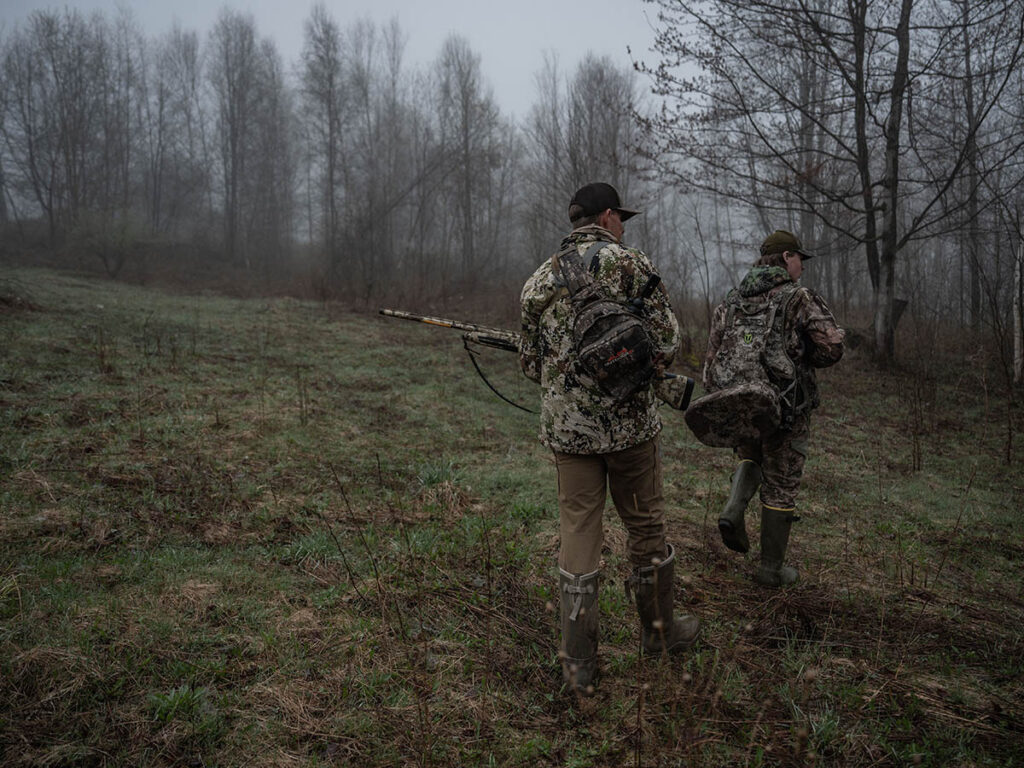
A cheap vest will suffice and serve you well, but for higher-end options, look at the Tethrd M2, SITKA Equinox Guard, or ALPS Outdoors.
Final Thoughts
The good thing about turkey hunting is that the learning never stops. Even experienced hunters make mistakes and are constantly learning, and no two turkeys ever act the same. Every hunt teaches you—sometimes what to do, sometimes what not to do—and that’s what keeps people coming back every spring.
More On Bird Hunting
- Dove Hunting In South Texas: An Ideal Beginner’s Hunt
- Raising Carnivores: Kid-Friendly Game Recipes
- Spandau S2 Review: Economical Inertia
- From Field To Table With Outdoor Solutions
- Federal Premium Hi-Bird Review : Field Tested Pigeon Hunting
Why You Can Trust CARNIVORE
Since its launch, CarnivoreWeb.com has been a trusted authority on hunting, fishing and wild food, delivering expert insight for outdoorsmen who live the field-to-table lifestyle. More than a hunting and fishing site, CarnivoreWeb.com covers the full spectrum of the modern outdoors—from rifles, bows, and fishing gear to cooking, conservation and adventure.
Our contributors are drawn from across the hunting and angling world, including seasoned guides, lifelong hunters, competitive shooters and outdoor writers with decades of field experience. Every review, article and feature is built on firsthand testing, deep research, and an unwavering commitment to accuracy.
Commitment to Journalistic Principles
At CarnivoreWeb.com, upholding journalistic integrity is our top priority. We follow strict editorial standards to ensure all content is accurate, transparent, and unbiased. Our editors and writers operate independently, free from outside influence, advertisers or stakeholders. We adhere to established journalistic codes of ethics, holding ourselves accountable for the information we publish, correcting errors when they occur and disclosing any potential conflicts of interest.
This commitment ensures that our readers can trust CarnivoreWeb.com to provide reliable, honest coverage that helps them make informed decisions—whether selecting gear, honing outdoor skills or preparing wild game.
Find out more about our Editorial Standards and Evaluation Process

