

At CarnivoreWeb.com, we independently review products and outfitters. However, we may earn a commission when you purchase products through links on our site. Read our affiliate policy. Read about how we test products.
I walk you through everything you need to know about making and using a Carolina rig.
Carolina rig fishing is a classic for a reason — it works whether the bite is tough or when fish are actively feeding. The idea is simple: the weight stays pinned to the bottom while the bait flutters and swims behind on a long leader, giving a natural presentation over rocks, flats, or weeds. You can run it on a spinning setup for finesse or a baitcaster when you’re using heavier weights, and it’s just as productive on shallow flats as it is over 20-foot drops.
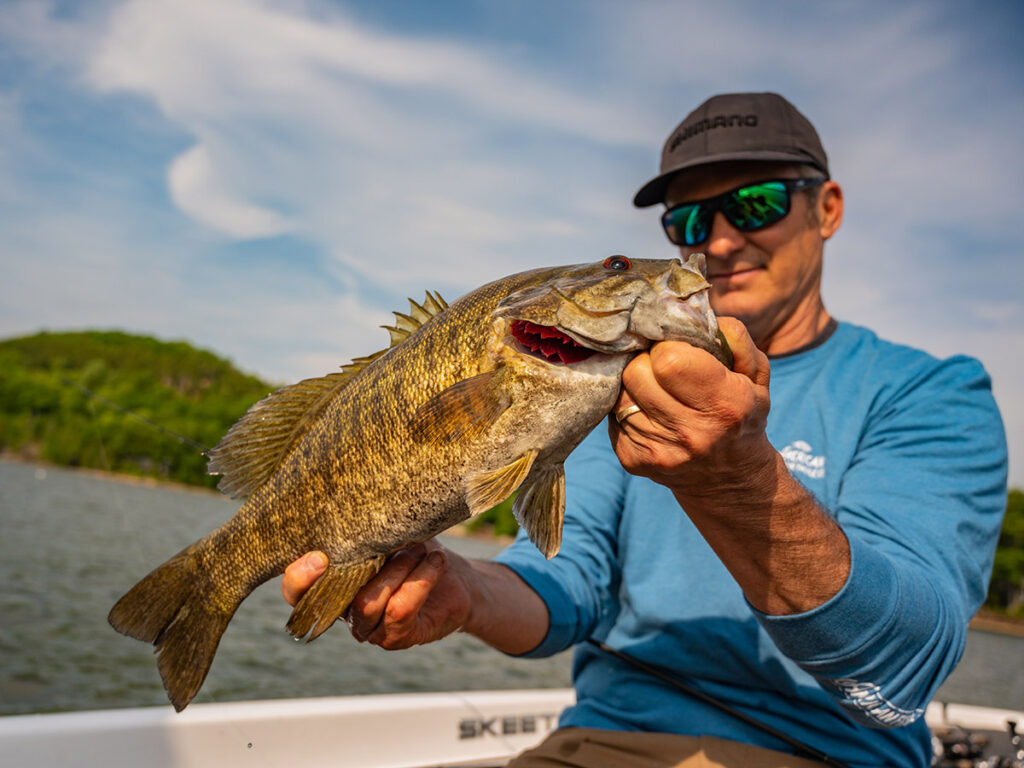
In short, the C-rig gives you both bottom contact and control. That steady bottom contact plus a lively bait trailing behind triggers reaction bites when moved quickly and gets lazy fish to check out the commotion caused by the weight. It’s a go-to when you want to cover water methodically, probe structure, or slow the presentation down when things are tough.
How to Make a Carolina Rig
Making a Carolina rig takes a little time, but overall, it’s simple. All it needs is a hook, a swivel, a bead, a weight, and sometimes a rubber bobber stop for added durability around rocky bottoms.
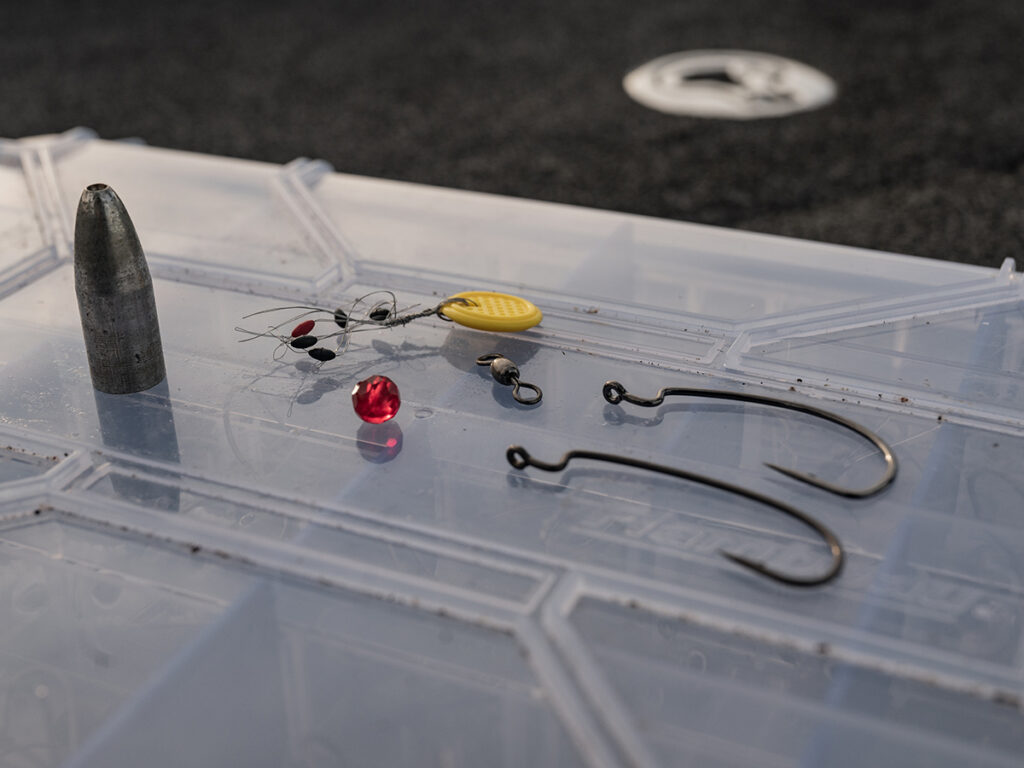
- Thread the tag end of the line through the weight so the head is facing up toward the reel.
- Add a bead to the same tag end.
- Tie on a swivel to your main line.
- Tie the tag end of the leader to the swivel and cut it to the desired length.
- Tie on a 3/0 EWG worm hook and put the bait on.
Sometimes, to keep the weight from slamming into the swivel when the rig is fished aggressively, I attach a couple of rubber bobber stops a few inches from the swivel. That lets the weight and bead make contact, giving a clicking sound that attracts bass, while the weight maintains bottom contact over rock or softer bottoms to stir up mud.
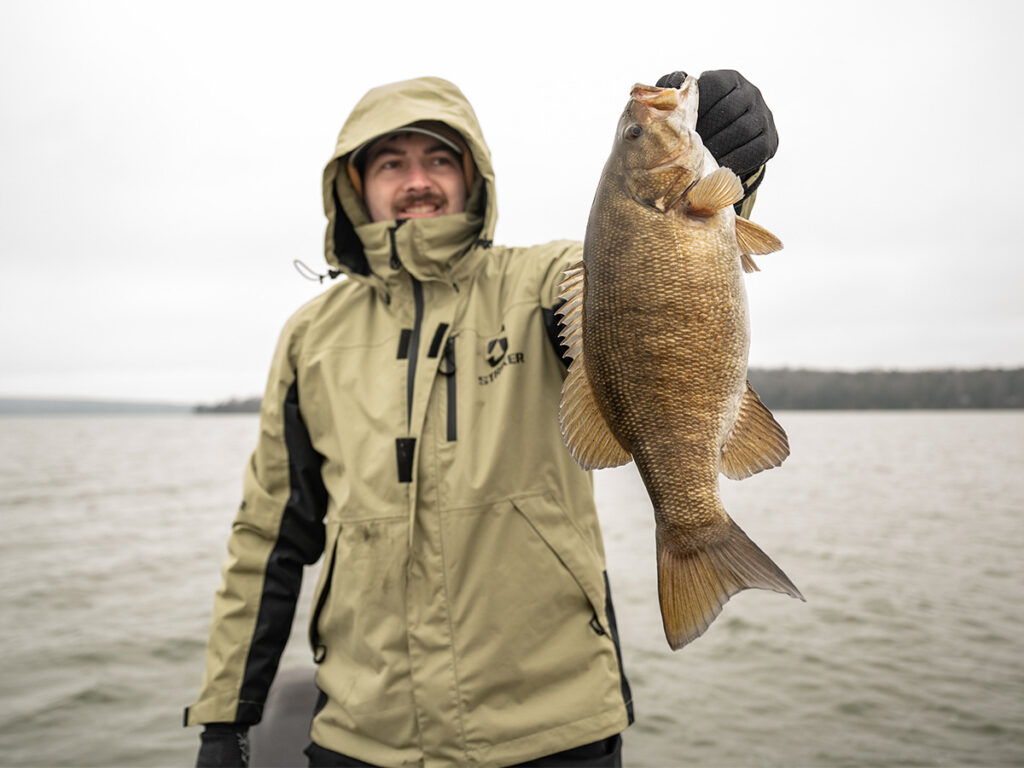
With one bobber stop for lighter weights or two for heavier weights, the stop prevents the weight from slamming the bead and fraying the knot. When I’m drifting and moving quickly, that extra protection keeps the knot safe a little longer. Still, check your knots and leader for frays often, especially around rocky bottoms.
How to Fish a Carolina Rig
Carolina rig fishing is simple: cast it out and slowly drag it back to the boat using the rod tip to feel for subtle bites. When conditions are calm, position the boat for your desired target. Let the rig sink to the bottom, reel up slack, then drag the bait slowly by lifting the rod and feeling for the weight to make contact with the bottom. Picture the weight coming through the cover — the commotion often draws nearby bass. When the weight comes through the cover and the bait falls on a slack line, that frequently triggers a bass to bite.
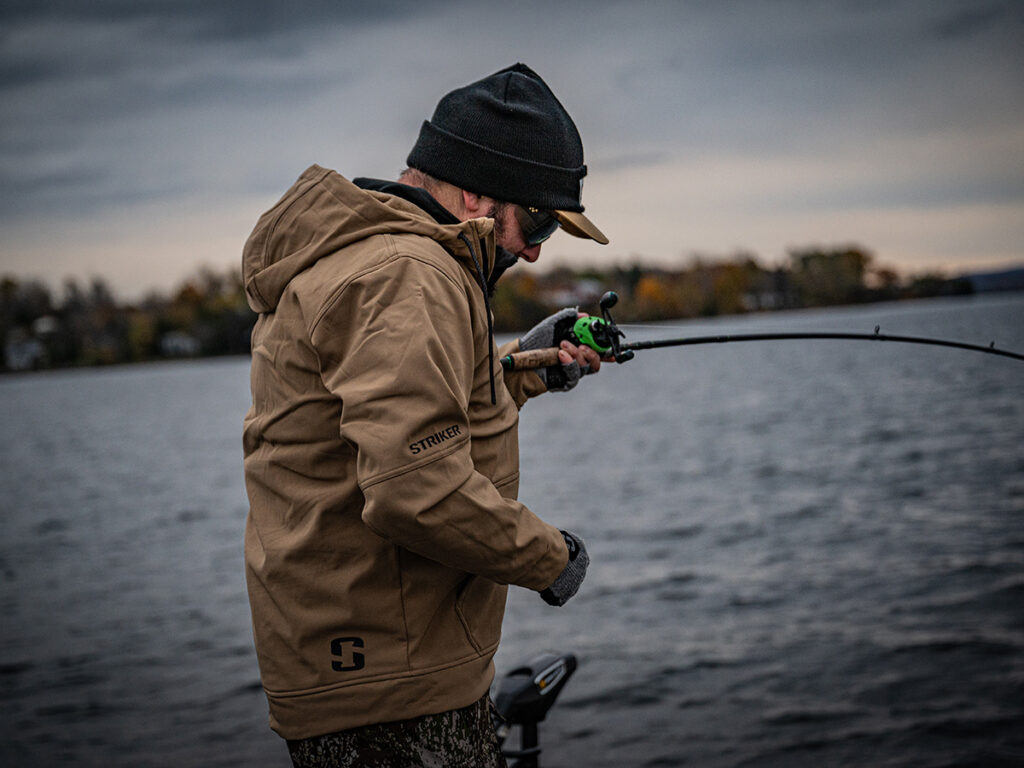
In windier conditions, drifting and fishing the Carolina rig gives a natural presentation while covering water. Boat control is key, but less is more: the boat just needs to stay in the correct depth, often along a contour line – covering water is the goal versus fishing a single spot. The bait moves faster, the weight makes more noise, and the bottom stirs up. The bait’s action draws reaction strikes that are vicious and easy to detect.
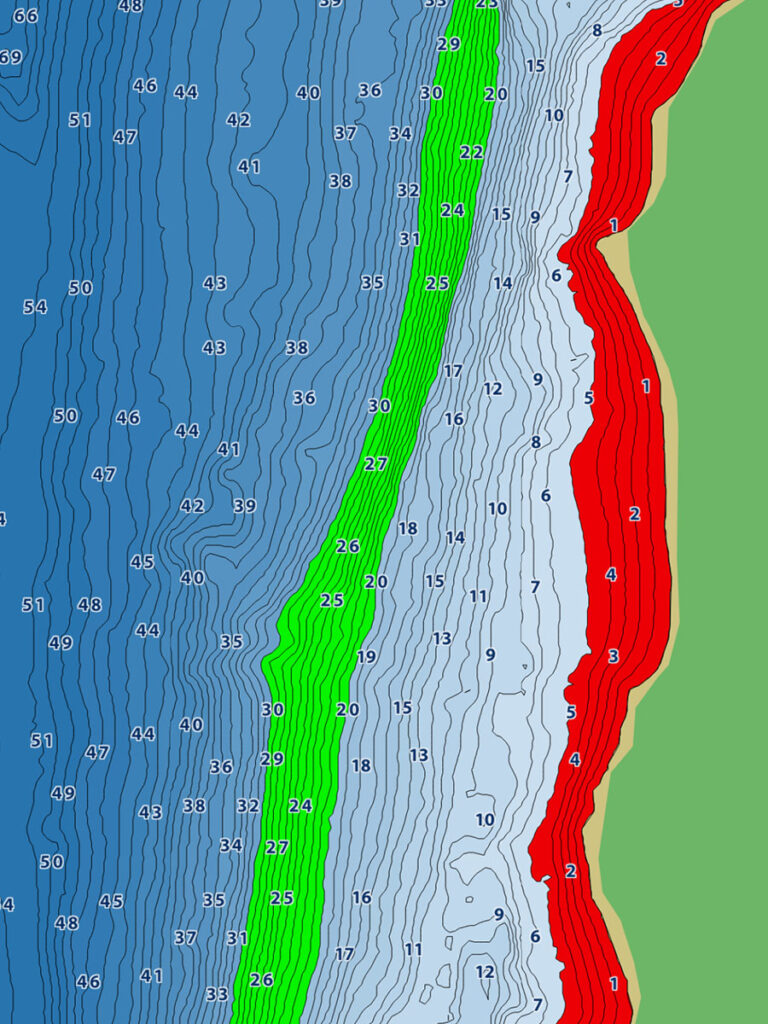
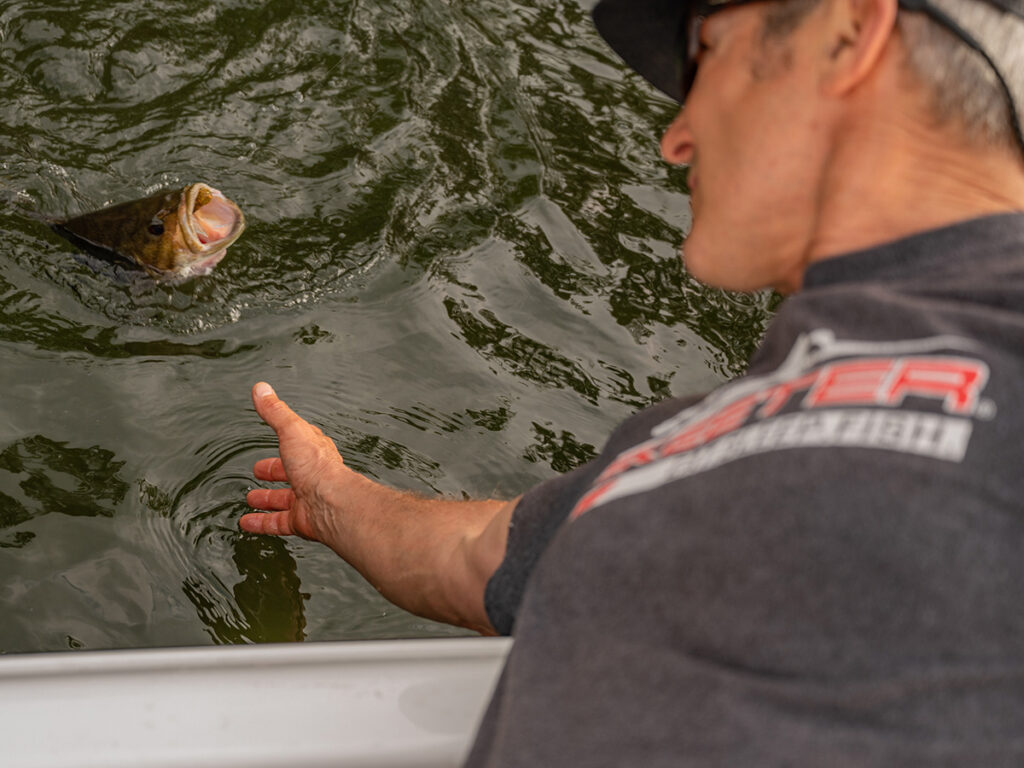
In both cases, the bite feels a little different. When casting and retrieving the rig, the bite is spongy—like the weight lifts off the bottom. You’ll feel weight, but it will be soft. When drifting, the bait moves faster, so bites are sharper and easier to detect. Because of the drift speed, the fish often hook themselves. In both cases, reel down to take up slack and finish with a sweeping hookset.
Carolina Rig Gear
For heavy-weight, deep-water Carolina rigs, I run a long leader — often as long as the rod. That extra length gives the bait more action away from the weight and lets me cut and retie several times during the day while keeping the same leader in rotation. For lighter weights in shallower water, I shorten the leader to around 2 to 4 feet, so the bait tracks tighter to the weight and moves through cover with ease.
When selecting rod, reel, and line for a Carolina rig, match your gear to the weight and depth. In shallow spots with light weights, a spinning rod works well for a finesse presentation. For deeper water or heavier weights, use a casting rod. Rule of thumb: upsize gear as depth or weight increases.
My main setup for a Carolina rig is a baitcaster rod with a 20-pound line and a 1-ounce bullet weight. I fish mostly in deeper water over 20+ feet, and often in windy conditions. To maintain bottom contact, I need a heavier weight. When drifting in rough water, I let a bulk of line out to keep the bait away from the boat. A heavy-action rod around 7’6″ is important to drive the hook and hold fish through the fight.
I use a Dobyns Champion XP 764C, heavy fast action rod, paired with a Daiwa Tatula 200 casting reel. The longer rod snaps the weight free from the grass and on the hookset, lets me sweep a lot of line, pinning the fish and boosting landing odds. I spool 20-pound Berkley 100% fluorocarbon in most conditions. The extra strength resists rocks and muscles, and the slight stretch gives some forgiveness on jumping fish.
My second setup, for a little lighter weight and shallower water, is a Fenwick HMG 7’1″ heavy, extra-fast action rod with an Abu Garcia Revo SX reel. For up to 1/2-ounce weights I use 15-pound Berkley 100% fluorocarbon and shorten my leader to 4 to 5 feet. This combo is a little lighter, and the extra fast action gets better hooksets and keeps them pinned.
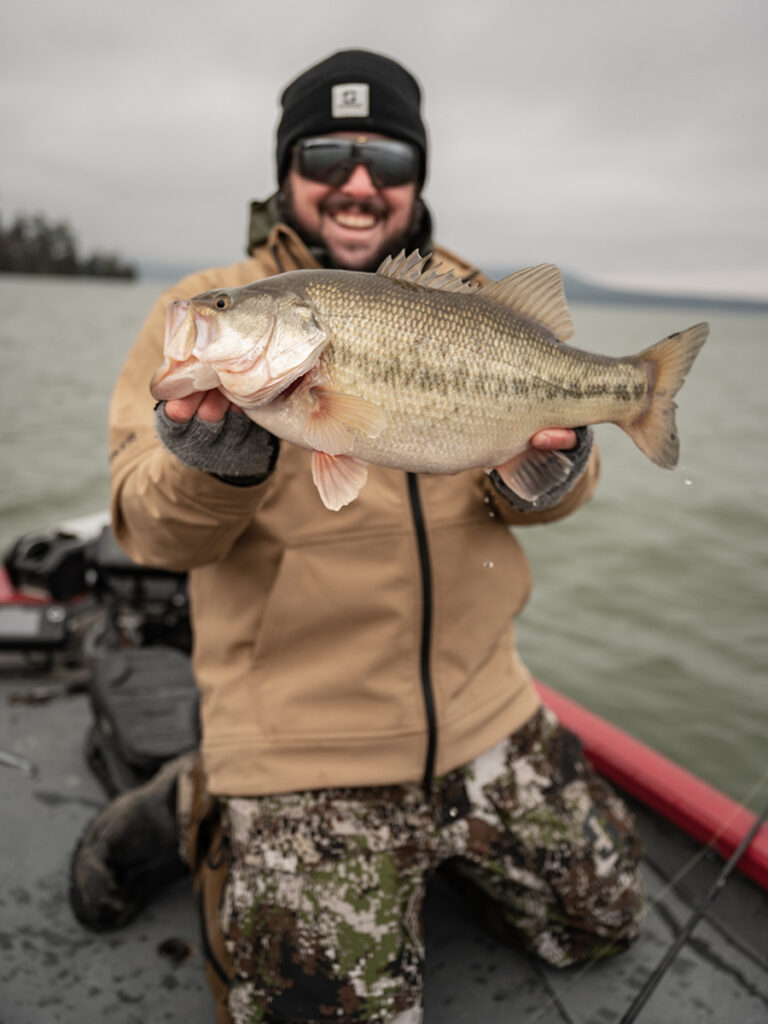
Generally, the heavier Dobyns setup is what I grab in summer and fall when fish sit deep; the lighter Fenwick combo is for post-spawn when fish move shallower. I often use the Ultrex/QUEST Spot-Lock to hold exact depth so I can make precise casts to structure. When it’s windier and tougher to control the boat, I let the Ultrex hold position and rely on the bigger rod, reel, and line to fish high-percentage areas I otherwise couldn’t.
For spinning combos, which I do not use much with a Carolina Rig, match the rod power to the size of the weight. In most cases I prefer a casting combo, especially in New England. When I fished in the South, there have been times I have had to downsize to a spinning rod.
Best Baits for a Carolina Rig
Carolina rig bait choices are simple: soft plastics that imitate what’s actually in the water. I prefer crawfish imitators and old-school lizards. Other baits that produce fry-style baits (also considered old-school), stick baits, swimbaits and flukes.
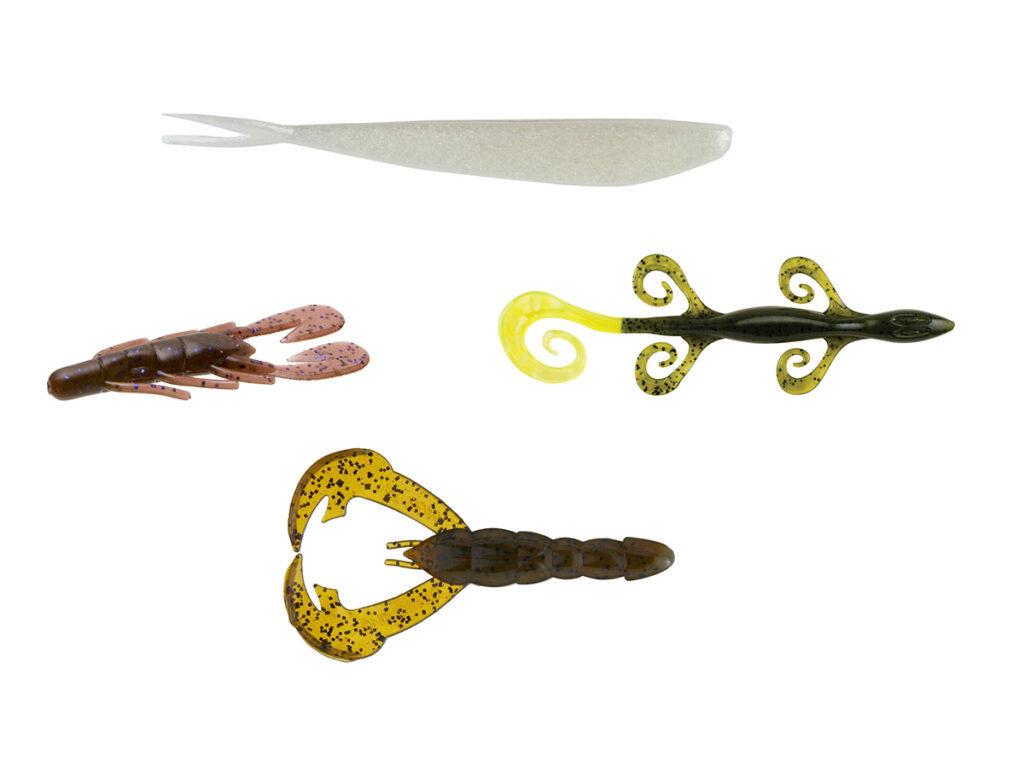
I prefer craw imitators on rocky, hard bottoms, and switch to flukes and lizards around vegetation. Color isn’t everything, and natural looking baits will get bites. Green pumpkin is always a safe bet, and in deeper water, sometimes a chartreuse dipped tail will help.
A few baits I keep plenty of:
- Zoom Speed Craw (Cinnamon/Purple) — A confidence bait, especially for smallmouth; it out-fishes most others side-by-side.
- Berkley PowerBait Power Lizard (6″, Watermelon/Chartreuse) — My go-to around grass when largemouth and smallmouth are mixed; good when fishing slow and precisely.
- Strike King Rage Craw — Tons of flapping action.
- Lake Fork Tackle Ring Fry — Subtle action for slower presentations.
- Zoom Fluke — Great when baitfish are the target.
Don’t overcomplicate it – rig baits that give you confidence.
In Conclusion
The versatility of a Carolina rig keeps it in my box all season long. It’s my go-to when I need a bite and it calms me down during a tournament, letting me regroup and think through tough spots on the water. A lot of different baits will work on a C-rig, the trick is finding what matches the water and the day. Use the setups above as a starting point, but size appropriately for your conditions on the water. Rig up a Carolina Rig and make a few casts – it just might become your new favorite rig when things get tough.
More On Fishing
- Best Bass Lures For Any Conditions
- Raising Carnivores: Kid-Friendly Fish & Game Recipes
- Best Gifts For Bass Anglers
- Spearfishing With Kimi Werner
Why You Can Trust CARNIVORE
Since its launch, CarnivoreWeb.com has been a trusted authority on hunting, fishing and wild food, delivering expert insight for outdoorsmen who live the field-to-table lifestyle. More than a hunting and fishing site, CarnivoreWeb.com covers the full spectrum of the modern outdoors—from rifles, bows, and fishing gear to cooking, conservation and adventure.
Our contributors are drawn from across the hunting and angling world, including seasoned guides, lifelong hunters, competitive shooters and outdoor writers with decades of field experience. Every review, article and feature is built on firsthand testing, deep research, and an unwavering commitment to accuracy.
Commitment to Journalistic Principles
At CarnivoreWeb.com, upholding journalistic integrity is our top priority. We follow strict editorial standards to ensure all content is accurate, transparent, and unbiased. Our editors and writers operate independently, free from outside influence, advertisers or stakeholders. We adhere to established journalistic codes of ethics, holding ourselves accountable for the information we publish, correcting errors when they occur and disclosing any potential conflicts of interest.
This commitment ensures that our readers can trust CarnivoreWeb.com to provide reliable, honest coverage that helps them make informed decisions—whether selecting gear, honing outdoor skills or preparing wild game.
Find out more about our Editorial Standards and Evaluation Process

